
AI Chip Thermal Management
TEC Application in High-Low Temperature Shock and Reliability Testing for AI Chips: Working Principles, Test Procedures and Practical Industrial Implementation
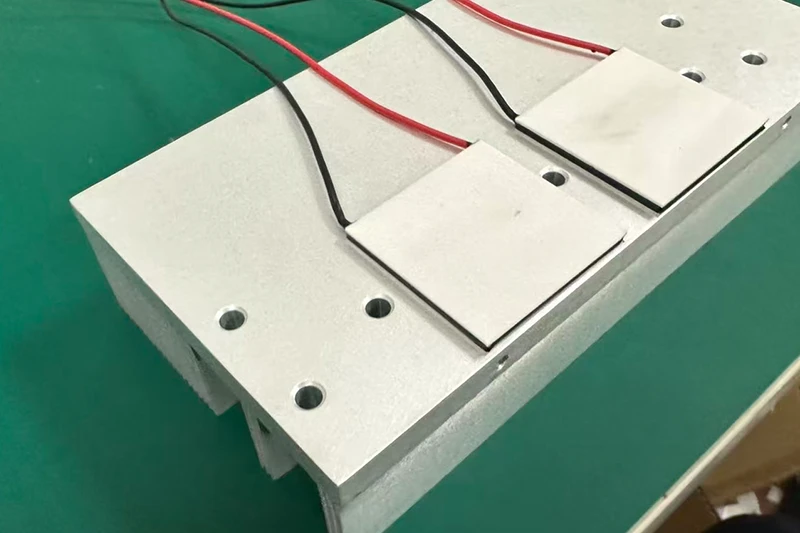
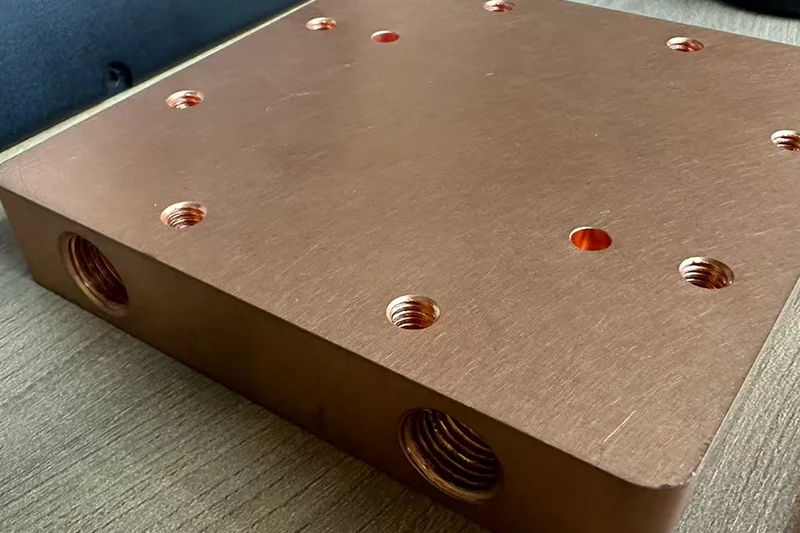
Application of TEC Thermoelectric Chips in High-Low Temperature Shock and Reliability Testing of AI Chips
In the production verification of high-end AI servers, computing clusters and high-speed optical modules, reliability testing for AI chips is no longer limited to conventional steady-state high-temperature heat dissipation tests. With the rapid iteration of large model computing power, AI chips are featured by instantaneous high load, intermittent dormancy, frequent start-stop and dramatic temperature fluctuations. Most failures of AI chips in actual service, such as package delamination, solder joint fatigue, substrate microcracks and thermal resistance drift, are not caused by continuous high temperature, but thermal fatigue damage resulting from long-term alternating cold and hot shocks and abrupt temperature changes.
Traditional testing equipment and solutions can no longer meet the requirements of operating condition verification for modern AI chips. Conventional high-low temperature chambers feature slow temperature change and response lag, with temperature switching taking minutes, so they fail to simulate millisecond-level transient temperature fluctuations. Air cooling and liquid cooling systems only provide heat dissipation and cannot actively raise temperature, making them unable to conduct fatigue tests with alternating positive and negative temperature differences. Ordinary heating tables deliver poor linear temperature control and uneven temperature gradient, which easily leads to distorted local overheating on chips and poor repeatability of test data.
Against this industry backdrop, Thermoelectric Cooler (TEC) has become one of the optimal solutions for performance simulation, cold and hot shock testing and reliability screening of AI chips. Leveraging the reversible Peltier effect and integrated structure combined with liquid cooling plates or heat sinks, TEC can realize rapid heating and cooling of AI chips by switching the positive and negative poles of current. It supports high-precision, high-dynamic and highly repeatable cold and hot shock reliability tests, and provides authentic and valid test data for R&D verification and quality control of mass-produced AI chips.
Core Advantages of Adopting TEC for AI Chip Testing
The biggest strengths of TEC lie in bidirectional temperature control, zero mechanical delay, ultra-fast transient response and high temperature accuracy — characteristics that traditional temperature control devices do not have, perfectly matching the requirements for dynamic operating condition testing of AI chips.First, TEC enables reversible cold and hot switching. Regular heat dissipation equipment can only remove heat passively and cannot heat up actively, so alternating positive and negative temperature cycle tests are impossible to perform. By contrast, TEC switches between cooling and heating on the same contact surface simply via current direction reversal. There is no need to replace fixtures or wait for equipment preheating or cooling down, which accurately replicates the full operating cycle of AI chips: low-temperature standby, instant high-load heating up and rapid cooling for dormancy.
Its transient response conforms to real computing power fluctuations. Temperature changes of AI chips during inference, training and mode switching are abrupt rather than gradual and linear. High-low temperature chambers rely on air convection for heat exchange, resulting in significant temperature response lag and large deviation between simulated conditions and actual operating environments. As a solid-state heat exchange component, TEC establishes a temperature difference immediately after power-on and switches between cold and hot states the moment current direction changes. It can truly reproduce transient temperature shocks that AI chips undergo in service.TEC delivers superior temperature control accuracy and consistent test results. It achieves a temperature control precision of ±0.1℃ with stable and linear temperature regulation, avoiding excessive temperature overshoot and unbalanced local temperature gradient. In comparative tests of chip reliability, extreme condition exploration and long-term thermal fatigue life tests, unified parameters are maintained throughout all test rounds to ensure reproducible and comparable test data.
The compact structure allows tight fitting for chip testing. TEC features small size and thin profile, and can be closely attached to chip surfaces. When integrated with liquid cooling plates or heat sinks, the assembled structure is rigid and ensures uniform heat exchange. It exerts no excessive mechanical stress on precision AI chips, and is compatible with bare dies, packaged chips and finished modules.
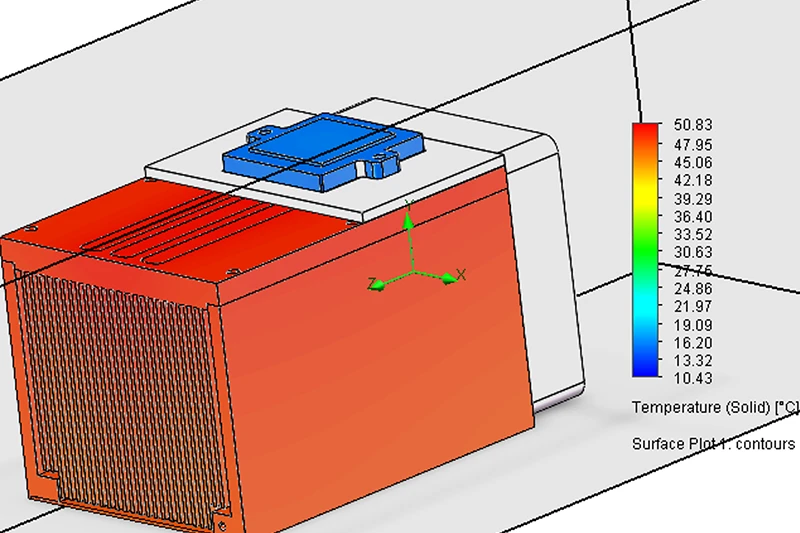
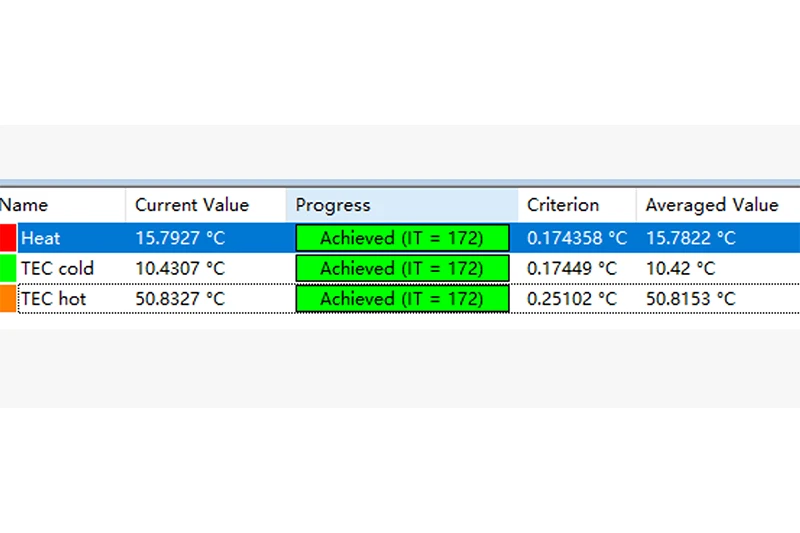
Structure and Working Principle of TEC-based AI Chip Test System
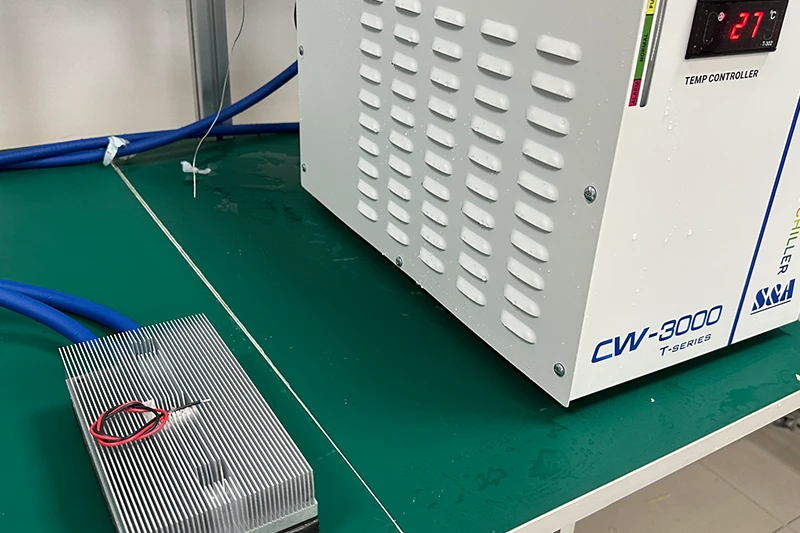
Our practical test solution adopts a typical integrated structure: the cold side of TEC is attached to the tested AI chip, while the hot side is mounted on a liquid cooling plate or heat sink. The liquid cooling plate dissipates accumulated heat from the hot side of TEC continuously to keep the whole system running stably without heat buildup. The operating logic of the system forms a closed loop. The cold side of TEC is fully bonded to the test surface of the AI chip. Thermal interface materials are applied on the contact area to eliminate contact thermal resistance and guarantee synchronous temperature transfer. The hot side of TEC is firmly fixed to the liquid cooling plate. Circulating water continuously carries away excess heat generated during TEC operation, keeping TEC working within a stable range and preventing cooling efficiency degradation caused by heat accumulation on the hot side.
The core testing principle is based on the reversible Peltier effect. When direct current flows in the forward direction, the cold side absorbs heat rapidly to cool down the AI chip, simulating low-temperature scenarios such as data center ambient conditions, chip standby and low-load operation. When the power supply polarity is reversed and current flows backward, the cold and hot sides of TEC swap instantly. The original cooling side starts heating up quickly to raise the chip temperature, simulating high-load computing and extreme full-load operating conditions.By programming to control current on-off, direction switching and magnitude adjustment, users can set parameters including low temperature holding time, high temperature holding time, temperature change rate and total cold-hot cycles. The system can automatically complete full-range high-low temperature cycling, rapid cold-hot shock tests and long-duration thermal fatigue aging tests for AI chips.
Standard Test Procedures for TEC-based Cold and Hot Shock Reliability Testing
Based on mass production experience, the complete standardized test flow is divided into five stages: fixture assembly and calibration, parameter configuration, steady-state temperature test, dynamic cold-hot shock cycling, and data collection and analysis, which fully complies with reliability verification standards for commercial AI chips.Fixture Assembly and Contact CalibrationClean the contact surfaces of the AI chip and TEC evenly. Apply thermal grease or thermal pads uniformly, then attach the cold side of TEC closely to the core heat-generating area of the chip to ensure full contact without gaps or displacement. Fasten the hot side of TEC onto the liquid cooling plate and adjust clamping pressure properly. Excessive pressure may damage the chip, while insufficient pressure will lead to increased thermal resistance. After assembly, start the water circulation system and set a constant basic temperature for the liquid cooling circuit to stabilize heat dissipation on TEC’s hot side.
Basic Parameter ConfigurationSet threshold values for low temperature and high temperature, duration of each cycle, total cycle times and temperature change rate according to chip specifications and test requirements. For mainstream AI computing chips, the test can cover a wide temperature range from -20℃ to 85℃, covering various actual scenarios including storage, cold start-up, full-load operation under high temperature and extreme heat dissipation failure in data centers.Steady-State High and Low Temperature Performance TestSwitch on forward current first. TEC operates in cooling mode to stabilize the chip at the preset low temperature and maintain the state for a scheduled period. Monitor the power-on stability, signal integrity and operating status of the chip to verify normal startup and operation without signal drift or malfunction under low temperature. Then reverse the current to raise the temperature gradually until reaching the upper limit. Keep the temperature constant to test the chip’s performance stability, power consumption variation and maximum temperature resistance under full-load high-temperature conditions.
Dynamic Cold and Hot Shock Cycling Test.The automatic polarity switching module enables continuous cyclic testing following the sequence: low temperature holding → instant heating shock → high temperature holding → instant cooling shock. Different from conventional slow temperature change tests, TEC completes temperature switching within seconds, exposing the chip to drastic temperature difference stress. Hundreds or thousands of continuous cycles accelerate thermal fatigue aging, and effectively reveal latent defects inside chip packages, solder balls and substrates. Data Collection and Reliability AnalysisRecord real-time data throughout the test, including chip surface temperature curve, temperature change rate, cold-hot switching response time, chip power consumption and running status. After the test, inspect samples visually to check for package cracking, solder joint detachment and substrate deformation. Evaluate the thermal reliability and long-term service life of the chip by combining test data and physical inspection results.
Practical Application Value of TEC Test Solutions in the AI Chip Industry
Nowadays, competition in the AI computing device industry focuses not only on performance indicators, but also on long-term reliability, environmental adaptability and all-weather operational stability. Traditional test methods only verify whether chips work normally under steady-state conditions, while TEC cold-hot shock testing evaluates their reliability under extreme conditions and long-term cyclic operation.
In the R&D phase, this solution helps engineers identify temperature resistance limits and weak points against thermal fatigue efficiently, so as to optimize chip packaging technology, layout design and substrate material selection. For mass production quality inspection, it serves as a key method for sampling verification and batch screening to eliminate defective products with latent risks. In terminal equipment validation, it accurately simulates real-world operating scenarios such as diurnal computing power fluctuation, ambient temperature variation in data centers and frequent device start-stop, and prevents mass downtime and early failure of finished equipment after deployment.
Compared with traditional testing equipment, TEC test systems feature compact structure, low overall cost and high testing efficiency with high simulation fidelity of actual working conditions. It makes up for the shortcomings of dynamic reliability testing in the AI chip industry, and has become a cost-effective and practical verification solution for R&D, mass production and quality inspection of next-generation high-speed AI chips, high-end computing modules and optical module chips.data and physical inspection results.
Importance of Kenfa Thermal Management Solutions for Reliability Testing of AI Chips
Failures of AI chips are mostly caused by dynamic temperature shocks and long-term thermal fatigue, rather than sustained high temperature. Leveraging the reversible thermoelectric effect, combined with liquid cooling structure and current polarity switching temperature control technology, TEC delivers integrated capabilities for rapid heating, rapid cooling, high-precision constant temperature and automatic cold-hot cycling.
This testing method solves the major drawbacks of traditional temperature control equipment, including slow temperature response, distorted simulated conditions and inability to conduct bidirectional cold-hot shock tests. It accurately reproduces the full-service scenarios of AI chips and fully verifies their environmental adaptability and long-term reliability. Undoubtedly, TEC-based testing is a practical and high-value solution widely adopted in R&D, mass production and quality validation of high-end AI chips.
1, 100W AI Chip Reliability Test Solution
2,36W Optical Module Chip Test Solution
3, High Thermal Conductivity Glass Cold Plate Solution for Optical Modules