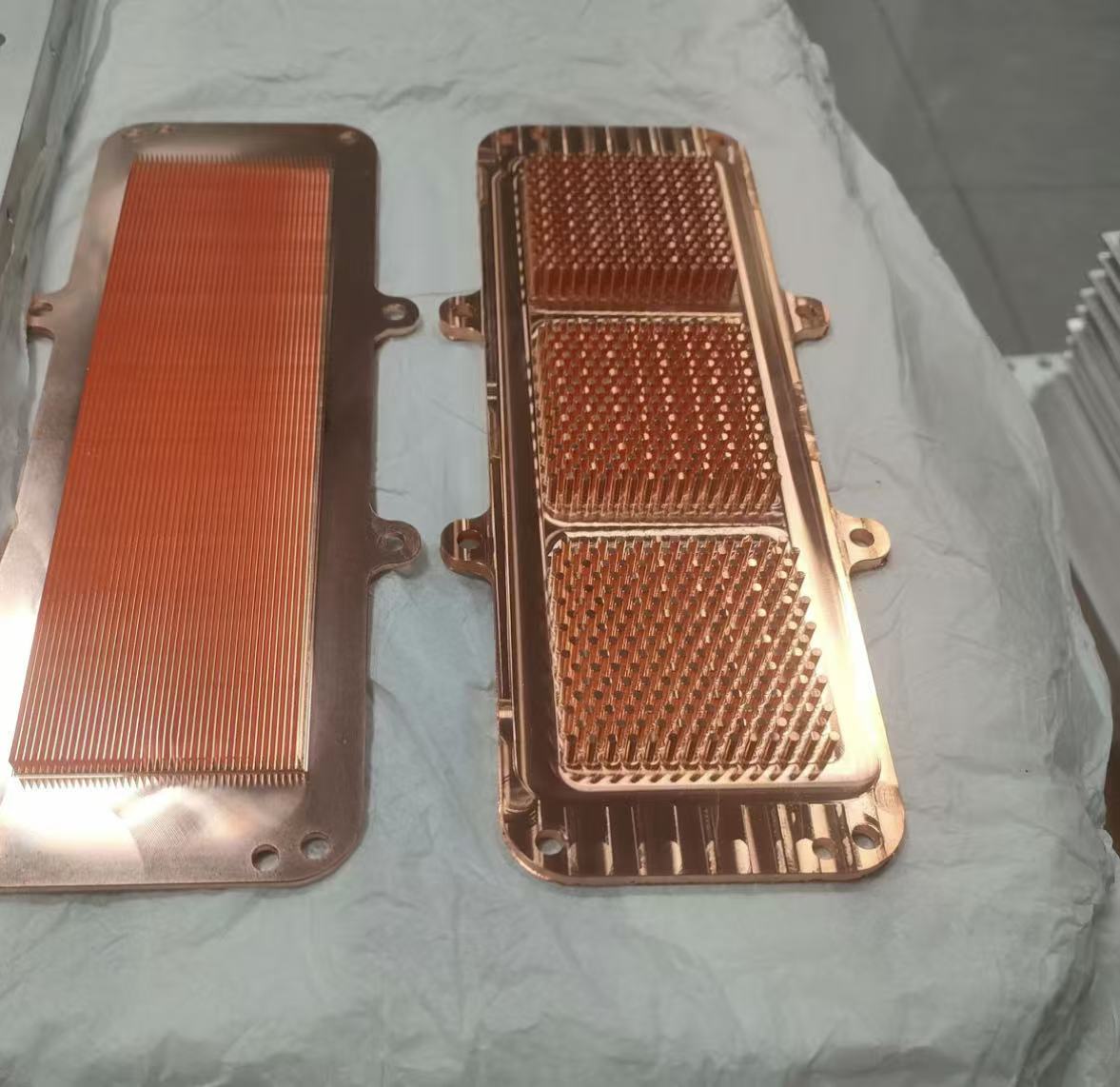
Research on Spiral Flow Channels for Liquid Cooling Plates,Aiming at the heat dissipation challenges of high-power devices in limited spaces, this paper designs a U-type liquid cooling plate with dimensions of 120mm × 50mm × 20mm. A comparative study is conducted between smooth straight flow channels and spiral flow channels under working conditions of 100W heating power and 1L/min low flow rate. The results show that the spiral flow channel can effectively break the laminar flow state and enhance turbulent heat transfer. The maximum surface temperature of the cooling plate drops from 49.61℃ to 41.9℃, significantly improving heat dissipation efficiency, while the pressure difference is only about 0.1MPa. The thread pitch and thread height of the spiral channel are key structural parameters that strongly influence flow resistance and heat exchange performance. By optimizing the matching relationship among pressure drop, heating power and flow rate, this structure provides an effective solution for high-power heat dissipation in extremely compact spaces.
Keywords
U-type cooling plate; spiral flow channel; laminar breakdown; turbulent enhancement; low flow rate; compact heat dissipation
1. Introduction
With the trend of miniaturization, high power and high integration in electronic equipment, the heat flux density of components has increased rapidly. Traditional liquid cooling plates with smooth flow channels easily maintain stable laminar flow under low flow rate and small volume conditions, resulting in thick thermal boundary layers and low heat transfer efficiency. Optimizing the flow channel structure has become the core method to improve the cooling performance.
The spiral flow channel, with its unique helical structure, can disturb the fluid flow, destroy the laminar boundary layer and induce turbulence, improving heat exchange efficiency without excessive pressure drop increase. This paper takes a compact U-type cooling plate as the research object, compares the heat dissipation performance of smooth and spiral flow channels under 100W heat load and 1L/min flow rate, focuses on the influence of thread pitch and height, and clarifies the application advantages of spiral channels in compact cooling scenarios.
2. Research Design and Parameter Settings
2.1 Model Design
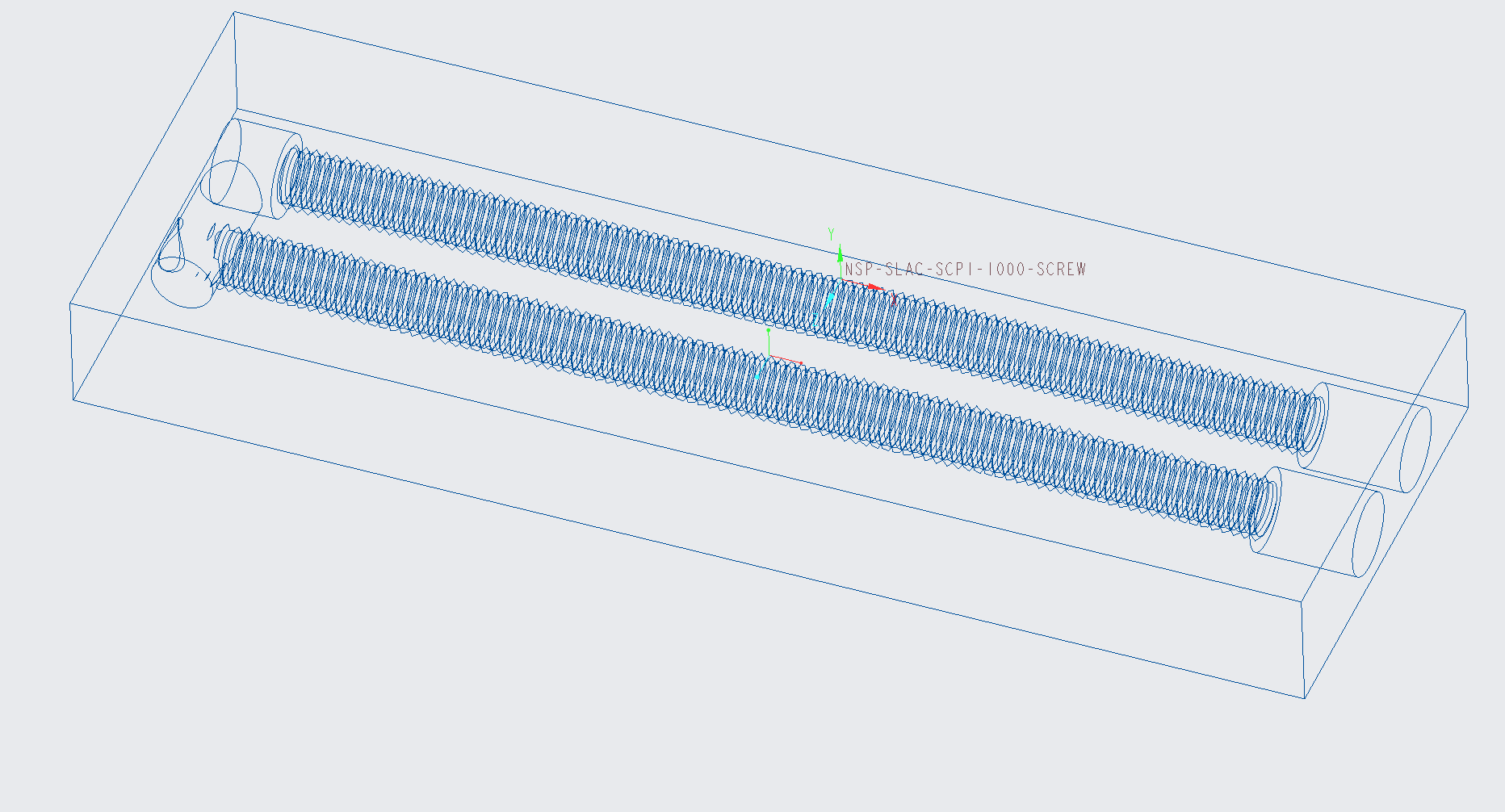
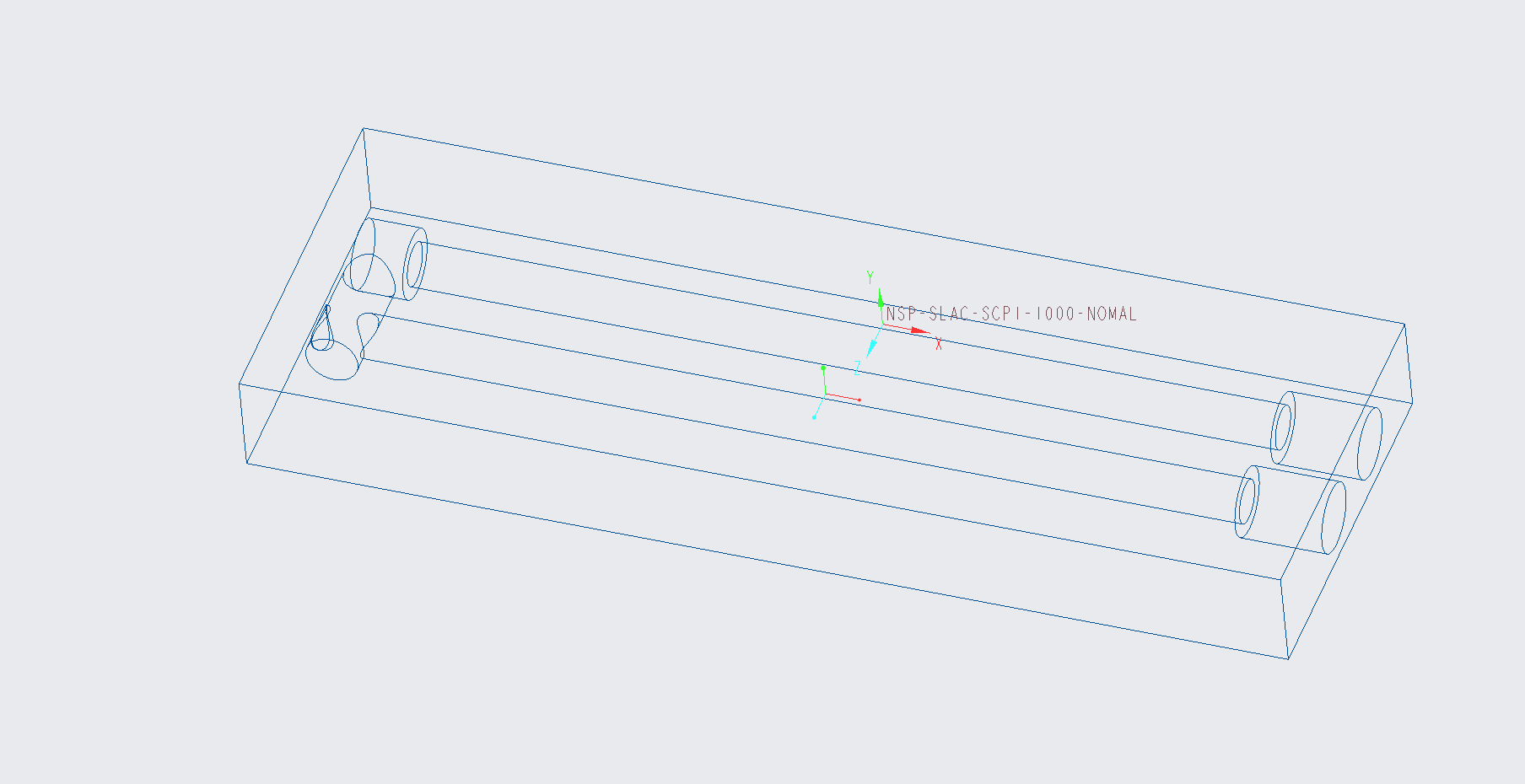
The overall size of the U-type liquid cooling plate is 120mm in length, 50mm in width and 20mm in height, made of aluminum alloy with high thermal conductivity. The flow channel adopts a U-shaped layout to fully cover the heating area. The control group uses a smooth straight-wall flow channel, while the test group uses a threaded spiral structure inside the flow channel to enhance fluid disturbance.
2.2 Working Conditions
The simulation conditions are set according to practical low-flow applications:
• Heating power: 100W
• Coolant: deionized water
• Inlet flow rate: 1L/min
• Ambient temperature: 25℃
2.3 Evaluation Indicators
The performance is evaluated by three key indicators: maximum surface temperature of the cooling plate, heat dissipation efficiency, and system pressure difference. Pressure drop directly reflects the flow resistance and pump power consumption, which is critical in low-flow systems.
3. Heat Dissipation Mechanism of Spiral Flow Channels
In smooth straight channels, fluid maintains stable laminar flow at low flow rates. The flow is steady along the axial direction, forming a thick and continuous thermal boundary layer, which greatly limits heat conduction and convection.
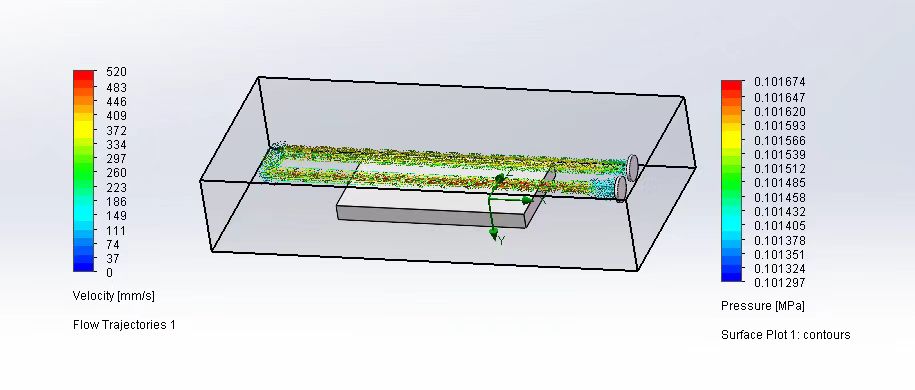
The helical thread structure inside the spiral channel imposes continuous tangential disturbance on the fluid, changes velocity distribution, and breaks the laminar boundary layer, promoting the transition from laminar flow to turbulence. Under turbulent conditions, intense mixing of fluid micro-clusters thins the boundary layer and reduces thermal resistance. Meanwhile, the spiral structure increases the actual heat exchange area. Together, these effects significantly improve heat transfer efficiency under low flow rate conditions.
4. Results and Analysis
4.1 Performance Comparison Between Two Flow Channels
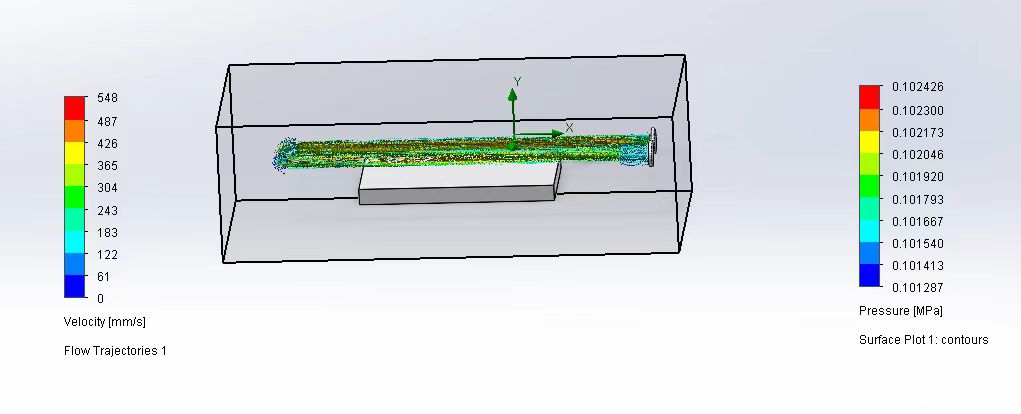
Under 100W power and 1L/min flow rate, the test results show obvious differences:
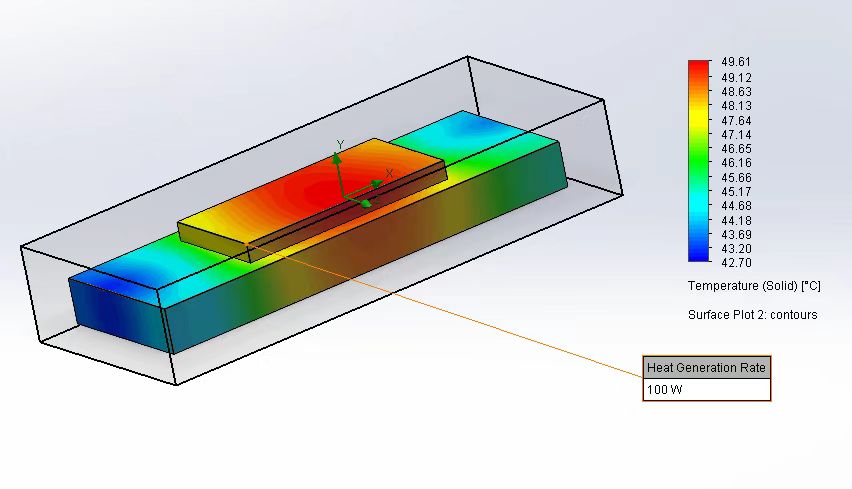
• Smooth channel: maximum temperature 49.61℃
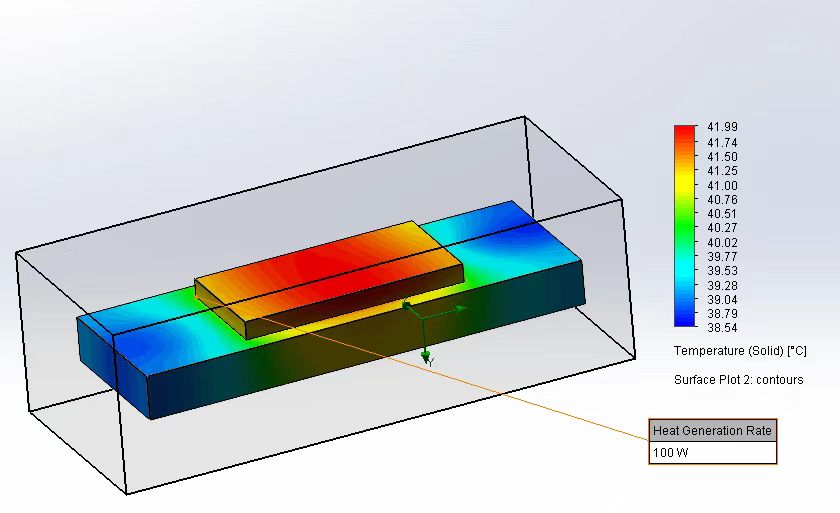
• Spiral channel: maximum temperature 41.9℃
The temperature drop reaches 7.71℃, indicating a remarkable improvement in heat dissipation. The measured system pressure difference is approximately 0.1MPa, which is very low and suitable for low-power pump systems. This proves that spiral channels can greatly enhance cooling without significantly increasing flow resistance in compact low-flow systems.
4.2 Influence of Structural Parameters
The thread pitch and thread height are the most important parameters of the spiral flow channel:
• Thread pitch: An overly small pitch increases flow resistance and pressure drop sharply. An overly large pitch cannot effectively disturb the fluid, resulting in weak heat transfer enhancement. Only a moderate pitch can balance turbulence and pressure loss.
• Thread height: Insufficient height provides weak disturbance and limited cooling improvement. Excessive height reduces the flow area, causing local high velocity and excessive pressure drop. Reasonable thread height maximizes disturbance while maintaining adequate flow space.
Therefore, the design of spiral flow channels must coordinate thread geometry, allowable pressure drop and target heat dissipation to achieve optimal overall performance.
5. Conclusion and Engineering Application
5.1 Conclusion
1. Under 100W heat load and 1L/min low flow rate, the spiral flow channel effectively breaks laminar flow and strengthens turbulence, reducing the maximum temperature from 49.61℃ to 41.9℃ with only 0.1MPa pressure drop.
2. Thread pitch and height significantly affect both heat transfer and flow resistance, requiring balanced optimization.
3. For low-flow, compact and high-power cooling scenarios, spiral flow channels provide high efficiency without increasing volume or pump power consumption.
5.2 Application Prospects
In fields such as consumer electronics, new energy vehicles, aerospace and communication equipment, high heat dissipation demand often coexists with strict space and power constraints. The U-type cooling plate with spiral flow channel is highly suitable for such applications.
In practical design, the thread pitch and height can be customized according to heating power, available space, flow rate and allowable pressure drop. Further research may include cross-sectional shape, helix angle and multi-objective optimization to support the development of high-performance compact thermal management systems.
6. Remarks
The spiral flow channel innovatively overcomes the laminar limitation of traditional smooth channels, offering an effective solution for high-performance heat dissipation in miniaturized equipment. With the ongoing trend of device integration, the study of spiral flow channel geometry and its thermal-hydraulic performance will play an important role in improving reliability and lifespan of electronic devices, and provide new directions for advanced liquid cooling technology.