
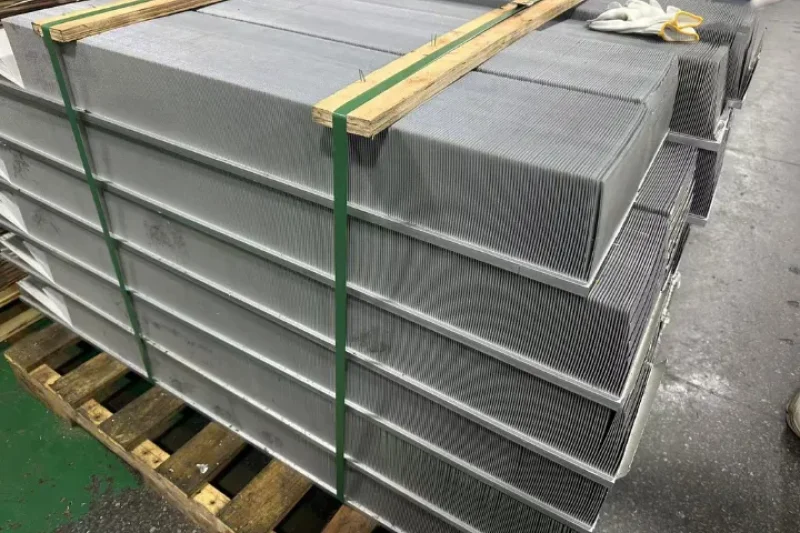
Have you ever stood next to a large solar inverter or an EV fast-charging station and felt the warm air being pushed out? That warmth is waste heat, and a lot of it. In our high-power world, we are generating more heat than ever before. A tiny processor in your phone might need a small heat spreader. But what happens when you’re dealing with a system that handles enough electricity to power a neighborhood? The cooling challenge becomes massive. Standard, small heat sinks simply can’t handle the job. This is where big heat sinks come into play. They are the unsung giants of thermal management, silently protecting our most critical infrastructure from meltdown. Understanding these large-scale solutions is key for any engineer working on the next generation of power electronics.
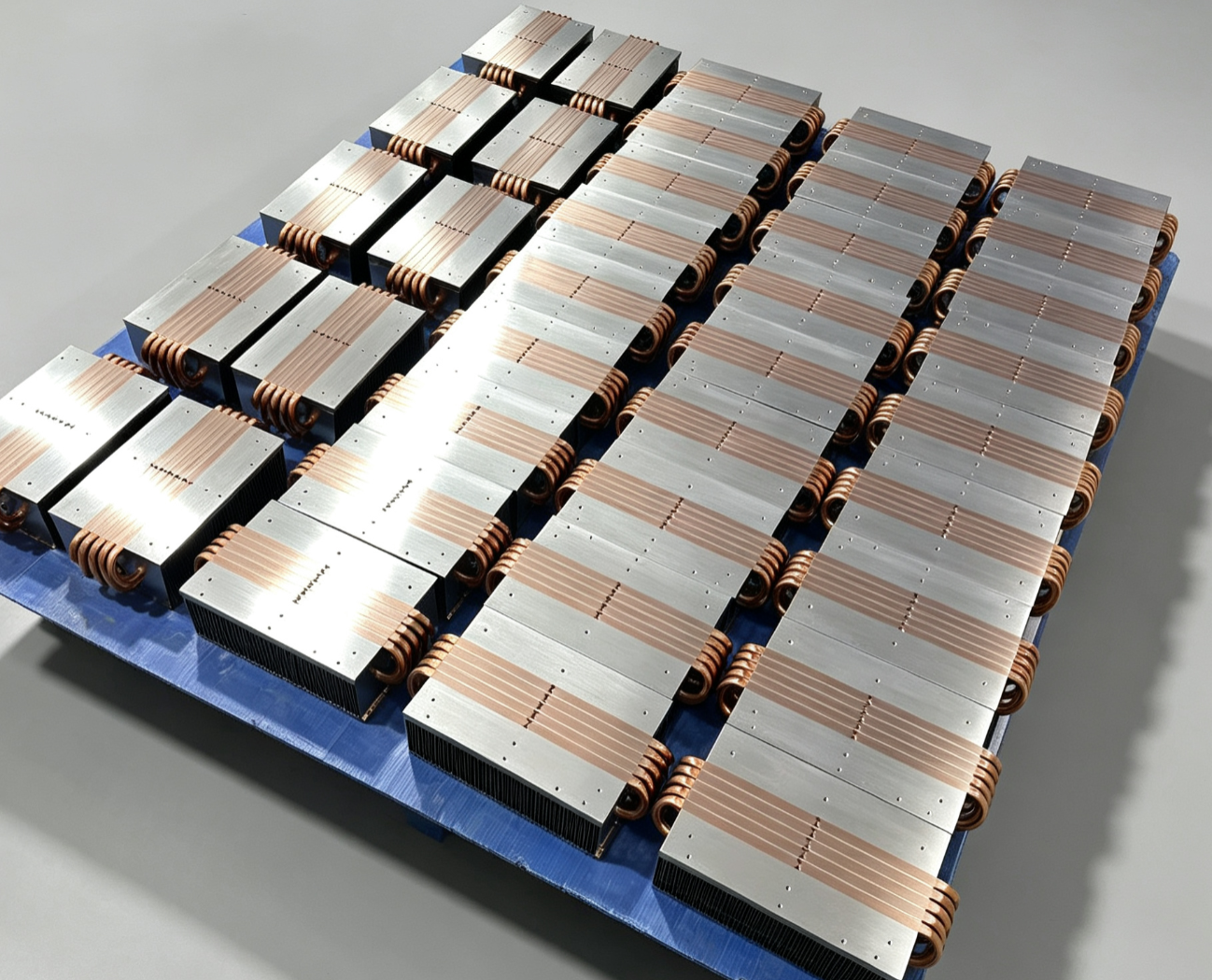
A “big heat sink” is an advanced thermal management device designed to cool high-power electronics that generate extreme heat (often over 100W). Unlike standard coolers, these are large, heavy solutions that use complex manufacturing methods like bonded fins, skived fins, or even liquid cooling to create a massive surface area. They are essential for ensuring the reliability and performance of systems in renewable energy, data centers, and electric vehicle infrastructure.
But what really makes a heat sink “big”? It’s not just about size. It’s about a different approach to engineering, manufacturing, and design. These are not simple blocks of aluminum; they are custom-engineered systems. They are vital for industries pushing the limits of technology. In this guide, we will explore the world of large-scale cooling. We’ll look at the industries that need them, how they are made, and what you need to consider when designing one. Let’s dive into the world of high-power thermal management and see what it takes to keep things cool when the heat is on.
What Defines a “Big Heat Sink” in Modern Thermal Management?
A “big heat sink” is defined not just by its physical size, but by its purpose: to manage high thermal loads that standard cooling methods cannot handle. These solutions are characterized by their large mass, extensive surface area, and reliance on advanced manufacturing techniques. They are specifically engineered for components or systems that dissipate hundreds or even thousands of watts of heat, where simple aluminum extrusions would fail.
When Standard Cooling Isn’t Enough
Most people are familiar with the small, extruded aluminum heat sinks found on computer CPUs or in LED light bulbs. These are perfect for managing relatively low amounts of heat, typically under 100 watts. The manufacturing process, called extrusion, is simple and cheap. You push a heated block of aluminum through a shaped die, like squeezing toothpaste from a tube. However, this method has a major limitation: the “aspect ratio.” You can’t make the fins too tall or too close together. This puts a hard limit on the total surface area you can create for cooling.
When you start dealing with high-power electronics, like an IGBT module in a solar inverter or a power supply for a 5G base station, you quickly exceed that 100W threshold. The heat density becomes too great. At this point, a simple extruded heat sink won’t work, no matter how big you make it. The design itself is the limiting factor. This is the point where you need to enter the world of big heat sinks.
Key Characteristics of a Large-Scale Solution
So, what makes these heat sinks different? It comes down to a few key features that all work together to handle massive heat loads.
- Large Surface Area: This is the most important goal. Since heat dissipates from the surface of the fins, more surface area means better cooling. Big heat sinks use clever manufacturing to pack as much surface area as possible into a given volume.
- Significant Mass: These heat sinks are often heavy, made from large blocks of aluminum or copper. The mass helps to absorb thermal spikes, providing stability during rapid changes in power load.
- Advanced Manufacturing: You can’t create a high-density fin stack with simple extrusion. Big heat sinks rely on advanced methods like skiving (cutting and folding thin fins from a solid block) or bonding (attaching individual fins into a grooved base).
- Designed for Forced Convection: These solutions are almost always designed to work with powerful fans or blowers. The dense fin structures need high-pressure airflow to be effective.
Moving Beyond Air: The Role of Liquid Cooling
There comes a point where the heat load is so intense that no amount of airflow or surface area can keep the component cool. Air is simply not a very good conductor of heat. When you reach this limit, the definition of a “big heat sink” evolves into a liquid cold plate. This is the ultimate solution for high-power cooling.
A liquid cold plate is a sealed metal block with internal channels. A coolant, like a water-glycol mixture, flows through these channels, absorbing heat directly from the power components. This method is an order of magnitude more effective than air cooling. It allows engineers to manage thousands of watts of heat in a very compact space. This is why liquid cooling is becoming the standard for high-performance applications like EV battery systems and data center servers.
Which Industries Rely on Large-Scale Thermal Solutions?
Large-scale thermal solutions are not a niche product; they are the critical enabling technology for some of the world’s most important and fastest-growing industries. Any sector that deals with high-power conversion, transmission, or storage generates massive amounts of waste heat. This heat must be managed effectively to ensure system reliability, efficiency, and safety. These industries are pushing the boundaries of what’s possible, and big heat sinks are what make it happen.
Renewable Energy
The green energy revolution runs hot. Both solar and wind power generation rely on massive power inverters to convert the raw electricity they produce into a form that is compatible with the power grid.
- Photovoltaic Inverters: A solar farm can generate megawatts of DC power. The central inverters that convert this to AC power are packed with high-power IGBT modules. These modules can be over 98% efficient, but that remaining 2% of a megawatt is still tens of thousands of watts of heat that needs to be dissipated. Large, fan-cooled heat sinks are essential to keep these inverters running reliably.
- Wind Power Generation: Wind turbines use powerful converters to manage the flow of energy from the generator to the grid. These systems are often located in harsh, remote environments, so their cooling systems must be incredibly robust and reliable.
Data Centers and Cloud Computing
Our digital world is built on servers, and those servers generate a tremendous amount of heat. As we demand more processing power for AI, cloud computing, and big data, the heat density inside data centers is skyrocketing.
A single server rack can now consume over 50kW of power—and nearly all of that becomes heat. Traditional air conditioning is no longer enough. This has led to a major shift towards high-performance, large-scale cooling solutions. Many modern data centers are now using liquid cold plates to cool CPUs and GPUs directly, which is far more efficient than trying to cool the entire room.
New Energy: EVs and Battery Storage
The shift to electrification in transportation and energy storage is another major driver for big heat sinks.
- Battery Energy Storage Systems (BESS): Large battery banks are used to stabilize the power grid and store excess renewable energy. Charging and discharging these massive batteries generates significant heat. Effective thermal management, often using large heat sinks or liquid cooling, is critical for battery safety and extending its service life.
- EV Charging Stations: DC fast chargers can deliver over 350kW of power to a vehicle. The power electronics inside these charging stations get extremely hot. They require robust, large-scale cooling systems to operate reliably all day long.
Power Electronics and Telecommunications
These traditional high-power sectors continue to push the limits of thermal design. 5G base stations, for example, have much higher power requirements than their 4G predecessors. The amplifiers and power supplies in these units need large, custom heat sinks to function in outdoor enclosures. Similarly, industrial power electronics, such as the rectifiers and converters used in manufacturing plants, have always relied on large, rugged heat sinks to ensure decades of reliable operation.
How Are Big Heat Sinks Manufactured for Maximum Performance?
You cannot create a high-performance, big heat sink with simple manufacturing methods. The goal is to maximize surface area in a way that is strong, reliable, and cost-effective. This requires advanced techniques that go far beyond standard extrusion. The choice of manufacturing method depends on the required performance, the production volume, and the overall budget for the project. Each technique offers a unique set of trade-offs between thermal efficiency and cost.
Creating High-Density Fins
The biggest limitation of a standard extruded heat sink is its low fin density. To overcome this, engineers use two primary methods to create large heat sinks with many more fins packed into the same space.
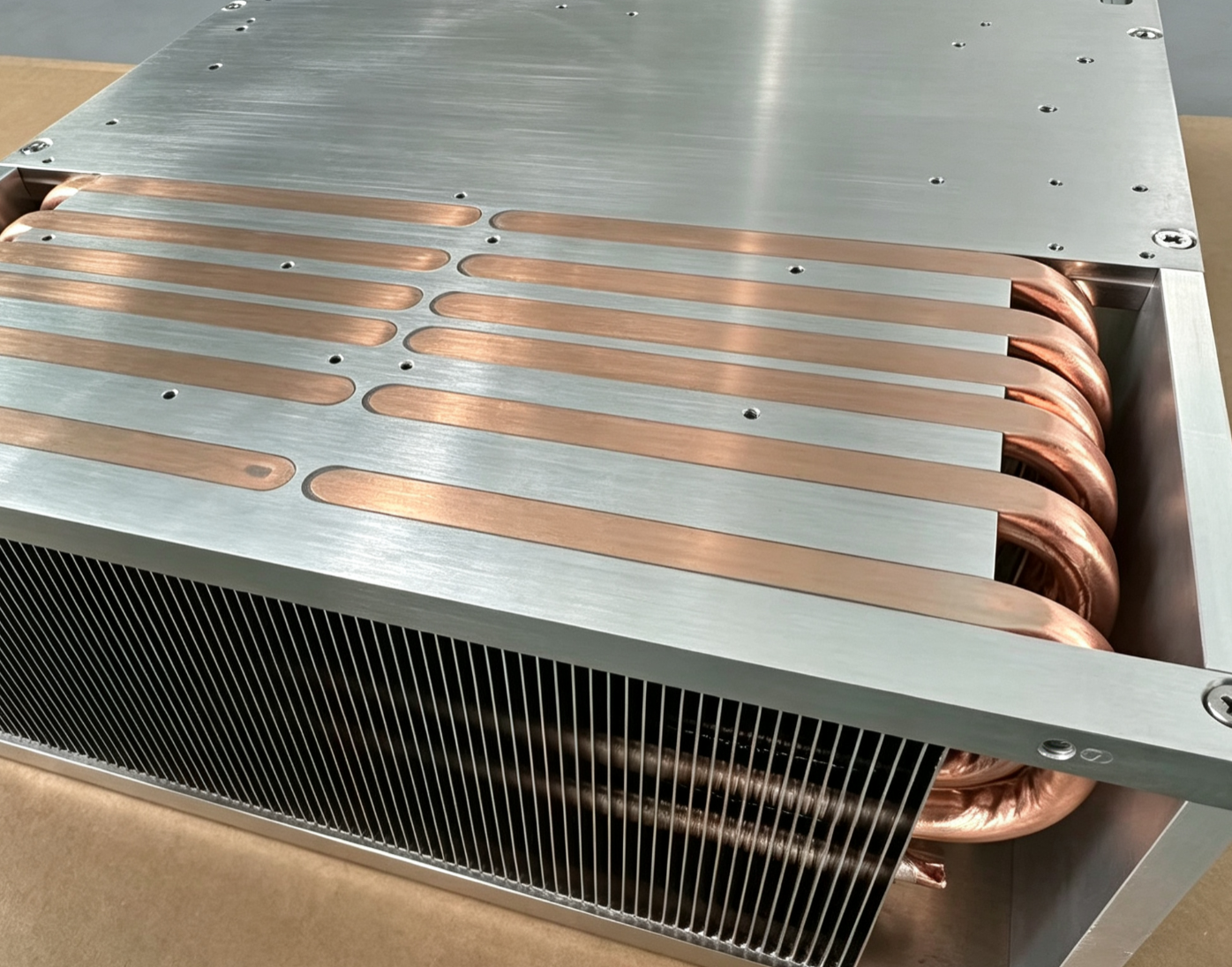
- Bonded Fin Heat Sinks: This is a versatile and popular method. First, a base plate is machined with a series of grooves. Then, individual fins, which are stamped from a sheet of aluminum or copper, are pressed or epoxied into these grooves. This allows for a much higher fin density and aspect ratio than extrusion. It also allows for hybrid designs, like using a copper base for fast heat spreading with lighter aluminum fins.
- Skived Fin Heat Sinks: This technique offers even better thermal performance. A skiving machine uses a very sharp blade to cut a thin slice from a solid block of copper or aluminum. The tool then bends this slice up to form a delicate, continuous fin. This process is repeated to create a heat sink where the fins and base are a single, solid piece of metal. This eliminates the thermal resistance of the epoxy or joint in a bonded fin design, creating a perfect path for heat to flow.
The Importance of Forced Convection
Big heat sinks with dense fin stacks do not work well on their own. They rely on forced convection—that is, using fans or blowers to move a large volume of air through the fins. The design of the heat sink and the choice of the fan are closely linked.
You can’t just slap a fan on any heat sink and expect it to work. A high-density fin stack creates a lot of air resistance, or “pressure drop.” You need a fan that can provide enough static pressure to force the air through those tight channels. The entire system—the heat sink, the fan, and the ducting—must be designed together to achieve the desired cooling performance.
This is why thermal simulation is so important. Using tools like Ansys Icepak, engineers can model the airflow through the heat sink and select the perfect fan to match its characteristics, ensuring optimal performance without wasting energy on an oversized fan.
When Air Isn’t Enough: Manufacturing Liquid Cold Plates
For the most extreme heat loads, you must move to liquid cooling. Manufacturing a liquid cold plate is a complex process that requires creating leak-proof internal channels. Two leading technologies are used to achieve this:
- Brazing: In this process, multiple layers of aluminum are stamped with channel patterns. These layers are then stacked together with a special filler metal and heated in a vacuum furnace. The filler metal melts and flows into the joints, creating a strong, sealed, and lightweight cold plate.
- Friction Stir Welding (FSW): FSW is a solid-state joining process. A rotating tool is used to “stir” the metal of two adjoining pieces together, creating a bond that is as strong as the original material. This method is incredibly reliable and is often used for high-performance applications in the automotive and aerospace industries where failure is not an option.
What Are the Key Design Considerations When Specifying a Large Heat Sink?
Specifying a big heat sink is a complex engineering task that involves balancing many competing factors. It’s not as simple as choosing the biggest one you can find. A successful design must deliver the required thermal performance while also meeting the project’s constraints for space, weight, cost, and noise. Getting this balance right requires careful analysis and a deep understanding of the entire system, from the heat-generating component to the final operating environment.
Thermal Resistance vs. Airflow
The single most important metric for any heat sink is its thermal resistance, measured in degrees Celsius per watt (°C/W). This tells you how much the temperature of the component will rise for every watt of heat it generates. A lower number is always better. However, a heat sink’s thermal resistance is not a fixed value; it depends entirely on the amount of airflow passing through it.
This creates a critical trade-off. You can achieve a very low thermal resistance by using a heat sink with extremely dense fins, but this will create a high pressure drop. To overcome this, you will need a powerful, high-pressure fan, which will be noisy and consume a lot of energy. Alternatively, you could use a heat sink with more open fins. This would allow you to use a quieter, more efficient fan, but the thermal resistance would be higher. The engineer’s job is to find the optimal balance point that meets the cooling requirements without exceeding the limits for noise and power consumption.
Material Selection: Aluminum vs. Copper
The choice of material has a huge impact on performance, weight, and cost.
- Aluminum (e.g., 6063 Alloy): Aluminum is the most common material for heat sinks. It offers good thermal conductivity, is lightweight, and is relatively inexpensive. It is the go-to choice for most applications where cost and weight are major concerns.
- Copper (e.g., C110 Alloy): Copper has nearly twice the thermal conductivity of aluminum. This makes it excellent at spreading heat quickly away from a small, concentrated source. However, copper is also three times heavier and significantly more expensive.
Often, the best solution is a hybrid approach. For example, in a bonded fin heat sink, you can use a copper base plate placed directly on the hot component to take advantage of its superior heat spreading. Then, you can use lighter and cheaper aluminum fins to dissipate the heat to the air. This gives you the best of both worlds.
Weight and Structural Integrity
Big heat sinks can be very heavy, especially if they are made of copper. A large heat sink for a power inverter can easily weigh over 20 kg (45 lbs). This weight must be accounted for in the mechanical design of the final product. The mounting points must be strong enough to support the heat sink, especially in applications that will experience vibration, like in a vehicle or a wind turbine. The structural integrity of the heat sink itself is also important. The fins must be strong enough to withstand the force of the high-pressure airflow without bending or breaking.
Cost vs. Performance
Ultimately, every design decision comes down to a trade-off between cost and performance. A custom-designed, skived copper heat sink will offer incredible thermal performance, but it will also be the most expensive option. A standard bonded fin aluminum heat sink will be much more affordable but may not provide the same level of cooling. The right choice depends on the value of what you are cooling. For a mission-critical telecom system where failure could cost millions, investing in a high-performance custom solution is an easy decision. For a more cost-sensitive industrial product, a more standard solution might be the better choice. The key is to analyze the total cost of ownership, including the potential costs of system failure due to inadequate cooling.
Is a Custom-Designed Big Heat Sink Better Than an Off-the-Shelf Solution?
For high-power applications, a custom-designed big heat sink is almost always better than an off-the-shelf solution. Standard, pre-made heat sinks are designed for general-purpose use and are rarely optimized for a specific component or system. A custom solution, on the other hand, is engineered from the ground up to meet the unique thermal challenges of your project, resulting in superior performance, a smaller footprint, and often a lower total cost of ownership.
The Power of Advanced Simulation
The single biggest advantage of a custom design is the ability to use advanced thermal simulation software. Tools like Ansys Icepak and Flotherm allow engineers to create a complete digital twin of your system. We can model the exact size and heat output of your components, the airflow from your chosen fans, and the impact of the surrounding enclosure. This allows us to:
- Optimize Fin Geometry: We can test dozens of variations of fin height, thickness, and spacing to find the perfect geometry that maximizes surface area while minimizing pressure drop.
- Identify Hotspots: Simulation can reveal unexpected hotspots in your design that would be difficult to find through physical testing alone. We can then modify the heat sink design to direct more cooling to these critical areas.
- Select the Perfect Fan: By matching the heat sink’s airflow resistance curve to a fan’s performance curve, we can select the most efficient fan for the job, saving energy and reducing noise.
This data-driven approach removes the guesswork from thermal design. We can verify and prove that our design will work before any metal is ever cut.
Unlocking a 30% Performance Boost
The result of this detailed optimization process is a heat sink that is perfectly tailored to your application. This is why a custom thermal solution can often deliver up to 30% better thermal performance compared to a similarly sized off-the-shelf product. This performance gain can be a game-changer. It might allow you to run your components at a higher power level, shrink the overall size of your product, or improve the long-term reliability of your system by keeping temperatures lower.
Design for Manufacturability (DFM)
A great design on a computer screen is useless if it can’t be manufactured efficiently and cost-effectively. This is where Design for Manufacturability (DFM) comes in. Because we have full in-house manufacturing capabilities, our design engineers work side-by-side with our production team. This ensures that every design we create is not only thermally optimal but also practical to produce. We can make small adjustments to the design that might have a minimal impact on performance but can significantly reduce the manufacturing cost or improve the quality of the final product. This collaborative approach ensures you get the best possible solution at a competitive price.
An off-the-shelf solution is a one-size-fits-all product. A custom solution is a partnership. It involves working with a team of thermal experts who can analyze your unique challenges and deliver a solution that is guaranteed to meet your needs. For any serious high-power project, the investment in a custom design pays for itself many times over in improved performance, reliability, and peace of mind.
How Do You Choose the Right Partner for Your High-Power Thermal Needs?
Choosing a thermal solutions provider is as critical as designing the heat sink itself. For high-power projects, you need more than just a supplier; you need a true engineering partner. The right partner will work with you from the initial concept to final production, bringing deep expertise, advanced technology, and a commitment to quality to the table. When evaluating potential partners, there are several key capabilities you should look for to ensure your project’s success.
Look for Full In-House Capability
A partner with end-to-end production capabilities under one roof offers significant advantages in quality control, speed, and communication. You want a company that can handle every step of the process internally, including:
- CNC Machining: For creating complex base plates and custom mounting features.
- Advanced Fin Manufacturing: Expertise in processes like skiving, bonding, and soldering.
- Liquid Cooling Technology: Proven experience with high-reliability processes like Friction Stir Welding (FSW) and vacuum brazing.
- Rigorous Testing: In-house equipment for thermal validation, leak testing, and quality assurance.
- Surface Treatments: The ability to provide finishes like anodizing or plating to meet environmental and performance requirements.
When one company controls the entire process, it eliminates the delays and quality issues that can arise from coordinating multiple outside vendors.
Verify Their Industry-Leading Expertise
Thermal management is a highly specialized field. Look for a team composed of seasoned veterans from leading thermal and electronics firms. This deep industry knowledge is invaluable. An experienced team will not only understand the best manufacturing practices but will also be at the forefront of cutting-edge innovations. They can often look at your initial design and suggest improvements that can lead to significant cost savings or higher product efficiency.
Don’t just look at what a company can build; look at who is on their team. An experienced engineering team is your most valuable asset. They can provide the critical feedback and DFM analysis that turns a good design into a great one, ensuring your final product is practical, cost-efficient, and reliable.
Demand Advanced Simulation and Rapid Turnaround
In today’s fast-paced market, speed is everything. Your thermal partner should use professional simulation software like Ansys Icepak or Flotherm to model and optimize your design digitally. This data-driven approach should enable them to deliver quick sample development and short lead times, typically within 3-4 weeks. This ability to provide rapid prototypes allows you to test and validate the solution in your own system quickly, accelerating your entire product development cycle.
Ensure Rigorous Quality Standards
For high-power applications, reliability is non-negotiable. Your partner must have a proven commitment to quality, backed by global certifications. Look for certifications like ISO9001 for quality management, ISO14001 for environmental responsibility, and especially IATF16949, the stringent quality standard for the automotive industry. These certifications are proof that the company has robust, repeatable processes in place to ensure every product they ship meets the highest standards.
Choosing the right partner is about finding a company that offers a value-driven partnership. They should provide sustained support throughout your project and be committed to your success. A true partner helps you achieve significant cost and efficiency improvements, ensuring your final product is a leader in the market.
Your Partner for the Most Demanding Thermal Challenges
Choosing the right large-scale cooling solution is a critical decision that impacts the performance, reliability, and cost of your entire system. You need a partner with the experience, technology, and commitment to deliver a solution that is perfectly tailored to your needs.
At Kenfa Tech, we are experts in advanced thermal management. Our team of industry veterans uses state-of-the-art simulation tools and a full suite of in-house manufacturing capabilities—from skived fins to Friction Stir Welded liquid cold plates—to solve the toughest cooling challenges.
Are you working on a high-power project? Don’t settle for a generic, off-the-shelf solution. Let our team provide a custom-engineered thermal solution that will unlock the full potential of your design.
Contact Kenfa Tech today for a free design consultation and quote. Let’s work together to build a cooler, more reliable future.