
Abstract:
New phase change energy storage material.With the rapid development of energy storage technology, electronic heat dissipation, building energy conservation and power battery temperature control, phase change materials (PCMs) have become a research hotspot in the field of thermal management due to their advantages of constant-temperature heat storage and release, high energy utilization efficiency and simple structure. As a typical organic phase change material, paraffin has been widely applied owing to its extensive sources, low cost, high phase change latent heat, excellent chemical stability, and negligible supercooling and phase separation. Nevertheless, pure paraffin suffers from inherent drawbacks including low thermal conductivity, easy leakage after melting and poor cycle stability, which severely restrict its application in high-precision temperature control, high-power heat dissipation and long-term service scenarios. This paper systematically summarizes the advantages and limitations of paraffin phase change materials, and emphatically analyzes the mechanism and application value of microcapsule encapsulation modification technology, aiming to provide references for the optimization research and engineering application of phase change energy storage materials. kenfa tech can provide the phase change energy storage material for customer’s thermal solutions.
1. Advantages and Application Value of Paraffin Phase Change Materials
Phase change materials absorb and release heat through solid-liquid phase transition and maintain a constant temperature during the phase change period, exhibiting excellent thermal energy buffering and temperature regulation capabilities. Among various phase change systems, paraffin-based materials are the most mature organic phase change materials in industrialization and scientific research.
The core advantages of paraffin are reflected in four aspects. Firstly, it is mainly derived from petroleum fractionation products with abundant raw material sources and low mass production cost, which is suitable for large-scale industrial application. Secondly, it possesses outstanding heat storage capacity, with a phase change latent heat of 150–250 J/g, delivering high energy storage density and superior temperature control performance. Thirdly, it has favorable chemical stability, hardly decomposing or oxidizing under normal temperature and conventional working conditions. It is non-corrosive and compatible with most matrix materials and device environments. Fourthly, the phase change process is stable without obvious supercooling and phase separation, featuring a narrow phase change temperature range and high temperature control accuracy. It can be widely used in electronic equipment heat dissipation, battery thermal management, building constant temperature control, industrial waste heat energy storage and other fields.
Benefiting from the above comprehensive performances, paraffin phase change materials have always been the core materials in the field of medium and low temperature energy storage and thermal management, with great engineering application potential.
2. Key Performance Defects of Pure Paraffin Phase Change Materials
Despite the excellent comprehensive properties of paraffin, pure paraffin has two unavoidable inherent shortcomings, which are core technical problems urgently needing to be solved in the industry.
First of all, it has ultra-low intrinsic thermal conductivity. The thermal conductivity of pure paraffin is only 0.15–0.25 W/(m·K), which is a typical low-thermal-conductivity organic material. Such low thermal conductivity leads to slow heat absorption in the heat storage stage and delayed heat release in the heat dissipation stage, limiting the efficiency of heat transfer. Under working conditions with high power and high heat generation density, the material cannot respond to temperature changes rapidly, easily causing heat accumulation and local overheating. This greatly reduces the temperature control effect and restricts its application in high-precision electronics, power batteries and other high-standard scenarios.
Secondly, pure paraffin has serious melting leakage and poor structural stability. Paraffin undergoes a significant volume expansion of 15%–30% during the solid-liquid phase transition. Unconstrained pure paraffin presents strong fluidity after melting and is prone to leakage and flowing. After repeated thermal cycling, the leakage problem is further aggravated, resulting in the loss of phase change materials and attenuation of heat storage capacity. Meanwhile, the leaked liquid paraffin will pollute the equipment matrix and endanger the safety and long-term service stability of devices. Therefore, pure paraffin cannot be used directly and independently, and modification and encapsulation are essential to realize shape stabilization.
3. Mechanism and Optimization Effect of Microcapsule Encapsulation Modification
To solve the problems of low thermal conductivity and easy leakage of paraffin, multiple modification methods have been developed, including adsorption shaping, porous carrier recombination, metal skeleton composite and microcapsule encapsulation. Among them, microcapsule encapsulation is one of the most mainstream and effective modification technologies for high-precision and high-stability application scenarios.
Microencapsulated phase change materials are micro-nano core-shell particles fabricated by physical or chemical methods, with solid or liquid paraffin as the core material and polymer, silica or inorganic composite coating as the shell material. This technology completely encapsulates paraffin inside the compact microcapsule shell, and the phase change process only occurs inside the capsule, fundamentally solving the application defects of traditional paraffin materials.
On the one hand, the microcapsule structure completely eliminates melting leakage. The dense and stable shell can firmly confine the molten liquid paraffin during the phase change process, preventing material flowing, exudation and loss. It significantly improves the cycle service life and structural stability of the material, solving the biggest pain point restricting the long-term application of paraffin.
On the other hand, microcapsule modification effectively improves thermal conductivity and heat transfer efficiency. Bulk pure paraffin has a small contact area and single heat transfer interface. In contrast, microcapsule particles possess a large specific surface area and can be uniformly dispersed in the matrix, which greatly increases the contact heat transfer area between phase change materials and the external matrix and strengthens heat transfer. Meanwhile, the adoption of high-thermal-conductivity shell materials or doping with thermal conductive fillers can further make up for the low thermal conductivity of paraffin, realizing the coordinated improvement of heat storage capacity and thermal conductivity.
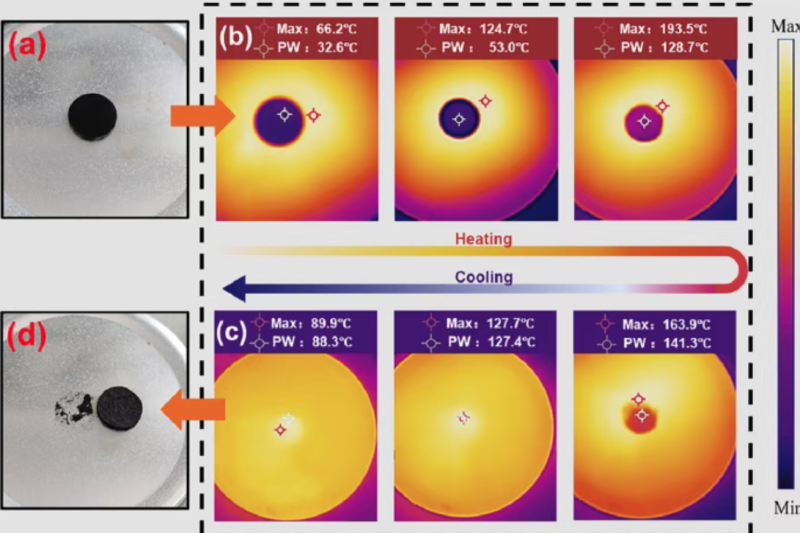
4,The composite features excellent comprehensive performance in thermal stability and heat storage capacity.
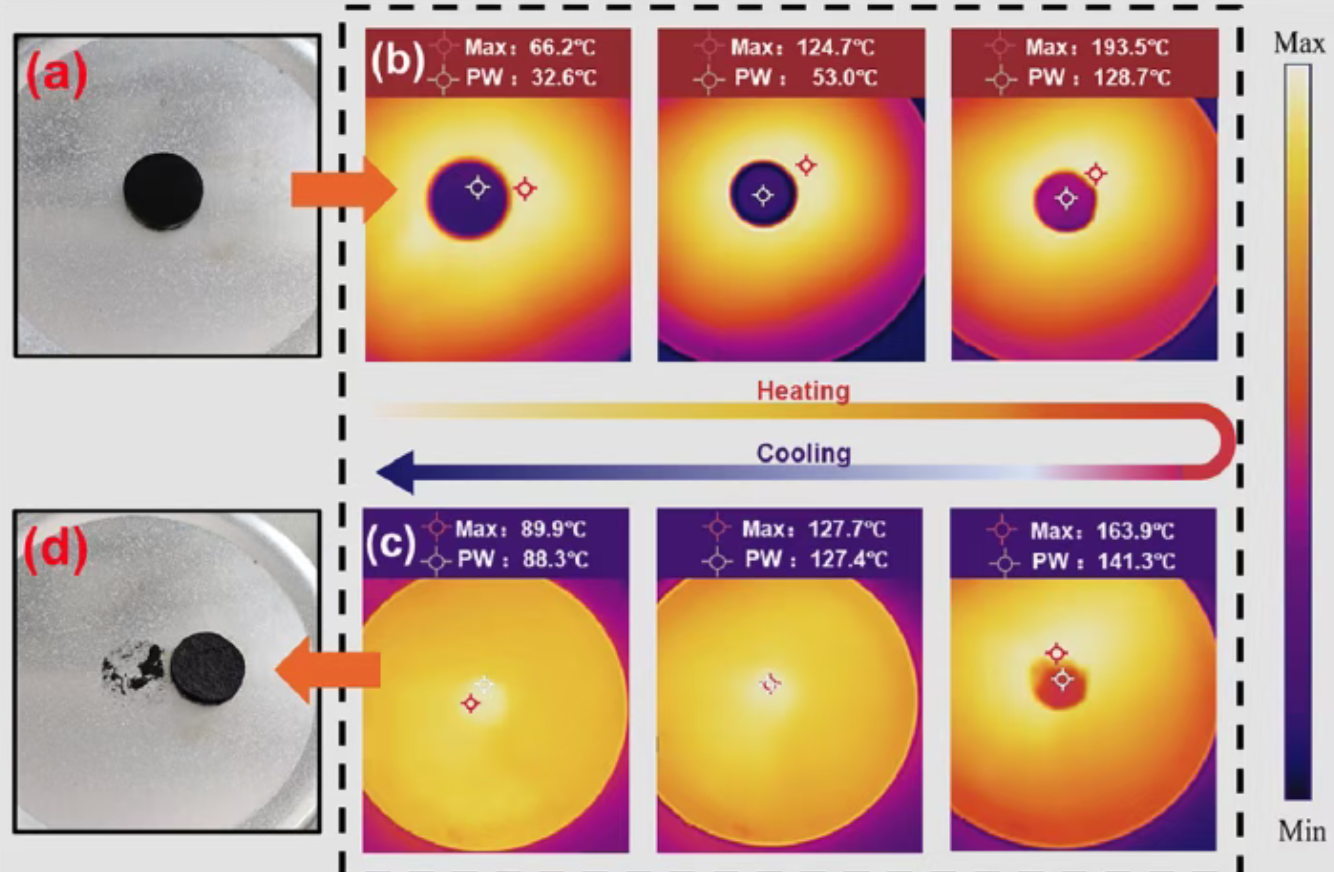
During thermal stability tests, engineers at KENFA conducted systematic comparisons between neat paraffin wax and the composite material. Test results reveal neat paraffin suffers severe leakage rapidly upon temperature rise, whereas the composite retains intact structural integrity even at elevated temperatures. Beyond superior thermal energy storage performance, the composite delivers prominent photothermal conversion performance. Under simulated solar irradiation, large-diameter carbon nanotubes swiftly capture solar energy and convert it into thermal heat, which is subsequently transferred into the paraffin matrix for thermal storage.
Experimental data shows under simulated solar irradiance of 150 mW/cm², the composite’s surface temperature climbs to 79.9 °C within 220 seconds at an average heating rate of approximately 0.23 °C/s, considerably outperforming neat paraffin. Further calculations by the research team confirm the composite achieves a photothermal conversion efficiency of 91.9%. KENFA’s R&D team attributes such outstanding performance primarily to the exceptional light absorption property of large-diameter carbon nanotubes and their interconnected continuous thermal conduction network. This architecture accelerates uniform heat diffusion to prevent localized overheating and improve the overall thermal response efficiency.
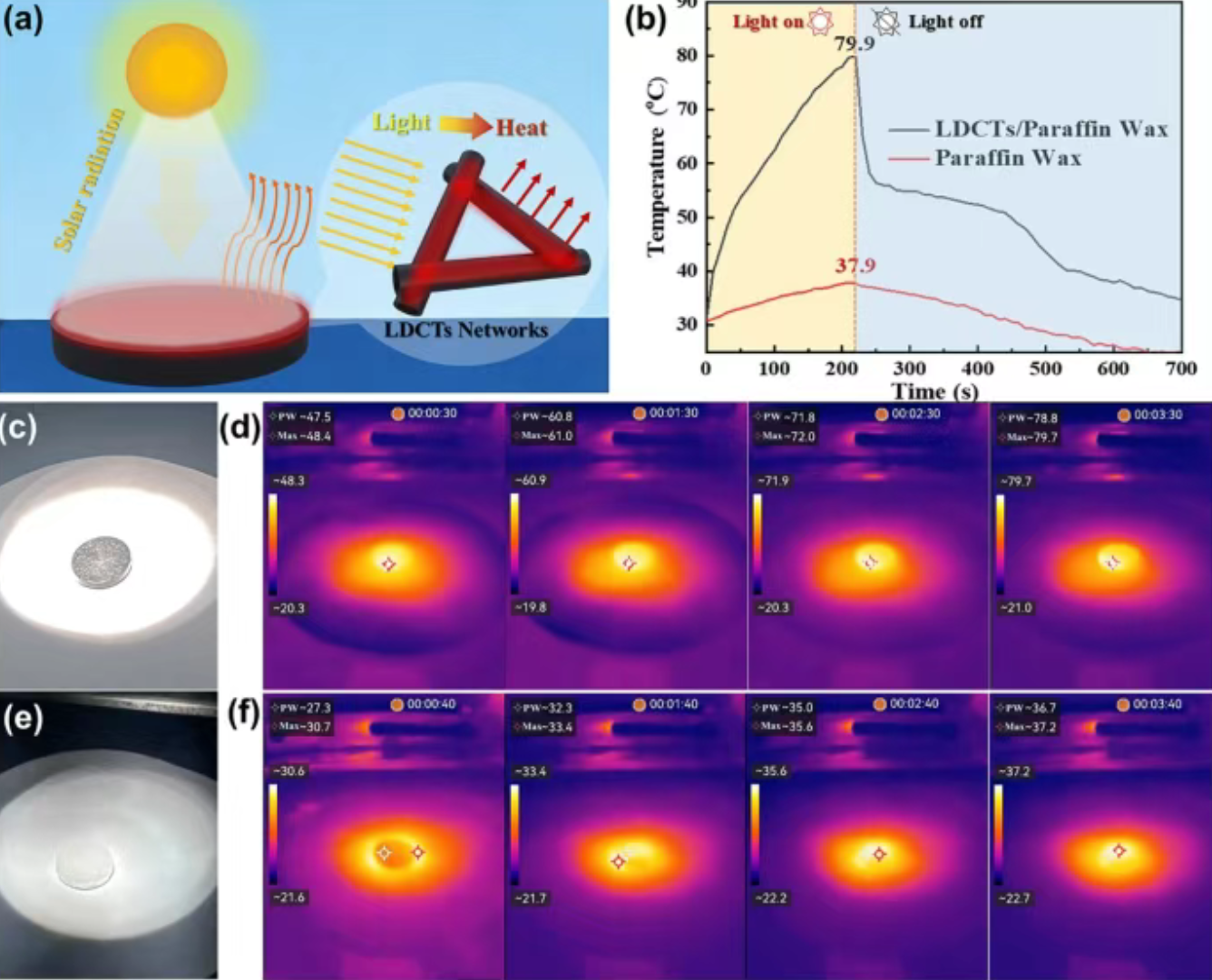
5,The composite achieves fast temperature rise and outstanding photothermal conversion performance under simulated solar irradiation.
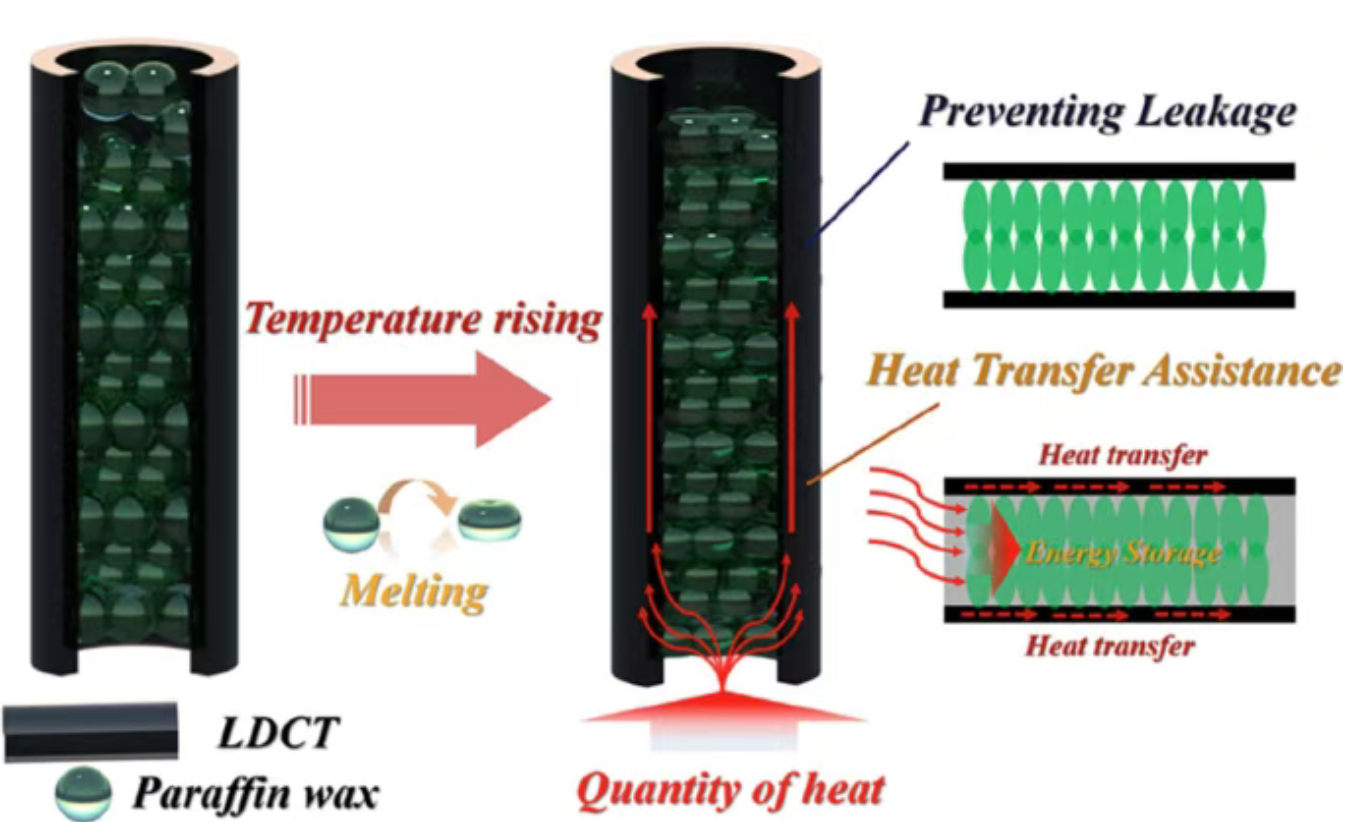
To further explore the internal interaction mechanism of the composite, KENFA’s research team analyzed the distribution of paraffin inside carbon tubes via molecular dynamics simulation. Results indicate paraffin molecules tend to arrange orderly along the tube inner wall and are significantly confined by the geometric structure of carbon tubes.
The study concludes the hollow structure of large-diameter carbon nanotubes effectively restrains the fluidity of molten paraffin, improving the anti-leakage capability and thermal stability of composites. Meanwhile, the interconnected carbon network forms efficient heat conduction pathways, enabling coordinated optimization of thermal storage and thermal conductivity.
Summary and Prospect
With high latent heat, excellent stability and low cost, paraffin has always been a core material for medium and low temperature phase change energy storage. However, its inherent defects of low thermal conductivity and easy leakage severely limit its industrial upgrading. Through core-shell structure design, microcapsule encapsulation technology completely solves the leakage problem of paraffin, improves the cycle stability of materials, and optimizes the interface heat transfer performance, which serves as an excellent modification scheme balancing energy storage performance, stability and practicality.
In the future, by optimizing the formula of capsule shell materials, introducing high-thermal-conductivity fillers such as graphene, boron nitride and alumina, and regulating the capsule particle size structure, an integrated phase change material system with high heat storage, high thermal conductivity, zero leakage and long service life can be realized. It has broad application prospects in new energy thermal management, intelligent building energy conservation, precision equipment temperature control, industrial waste heat energy storage and other fields. This research offers a novel route for designing high-stability phase-change energy storage materials and provides references for the application of carbon-based composites in thermal management and solar thermal utilization. In the future, such materials are expected to find promising applications in building energy conservation, flexible thermal management, solar heat storage, and aerospace thermal control. Our KENFA R&D team can cooperate with customers to develop cutting-edge thermal management technologies.you can email to us king@kenfatech.com