
Abstract
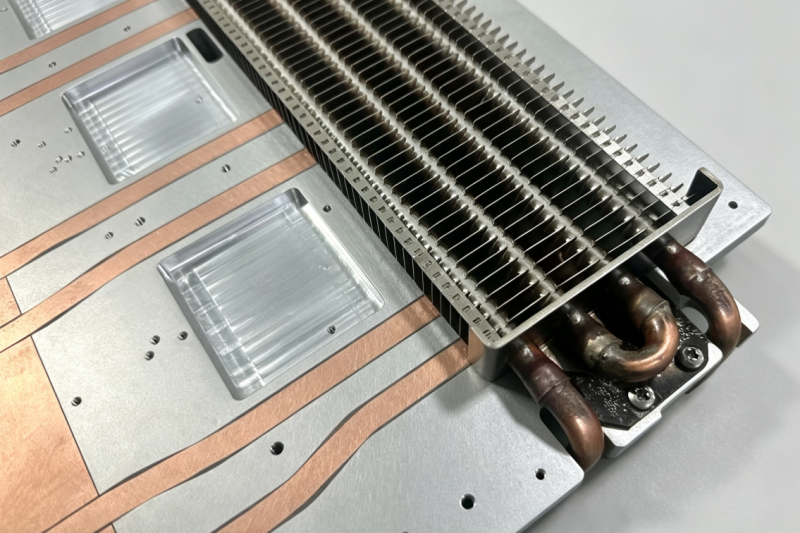
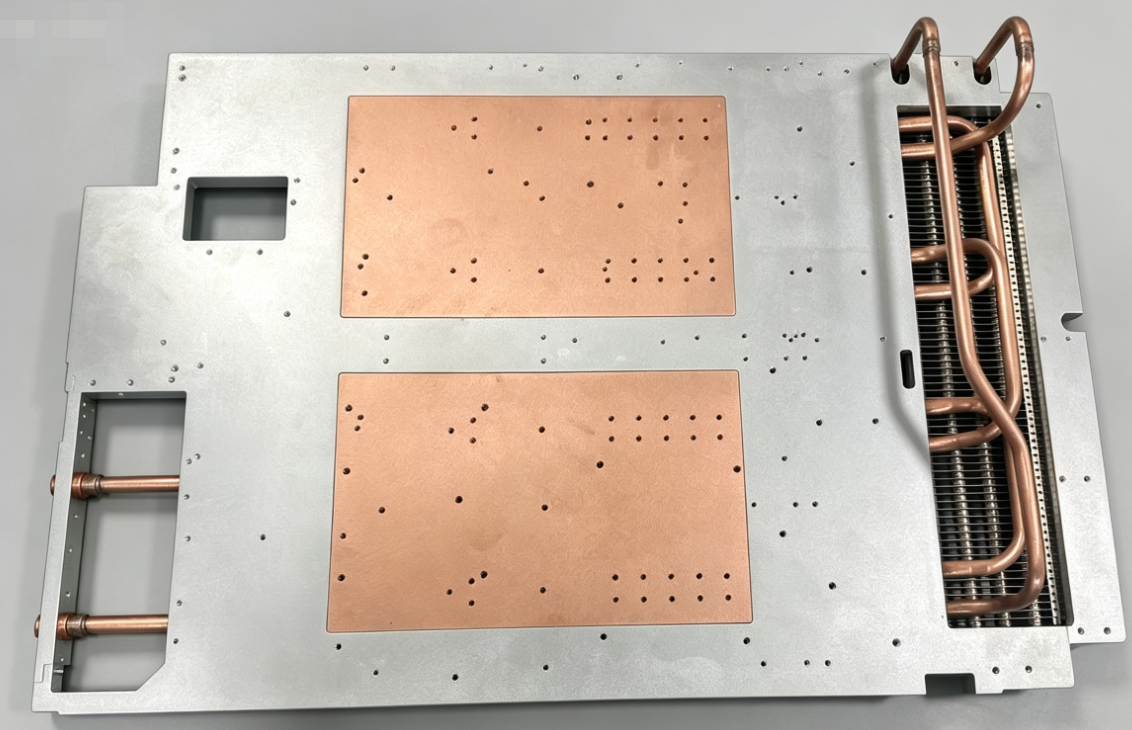
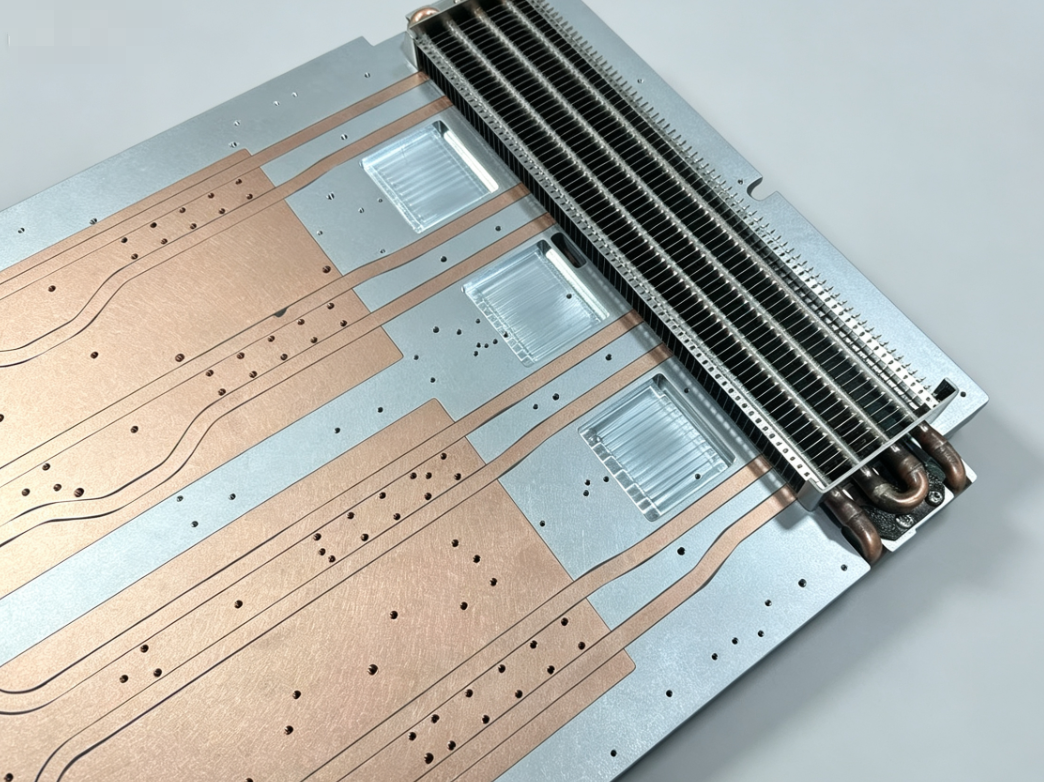
Liquid Cooling Plate with Integrated Heat Exchanger – Compact High-Efficiency Thermal Management Solution.Liquid cooling plate and heat exchanger are core thermal management components for high-power electronic and energy storage equipment. Traditional thermal solutions adopt split layouts of independent liquid cooling plates and external heat exchangers, which suffer from excessive assembly accessories, large space occupation, multi-layer interface thermal resistance and poor operational stability. To solve these universal industry pain points, this paper proposes an innovativeliquid cooling plate integrated heat exchanger thermal solution with high integration and compact structure. This solution uses a 600×400×20mm aluminum alloy plate as the base of the liquid cooling plate, embeds high-thermal-conductivity copper blocks in high heat flux density areas, and equips with Φ9.52mm standard copper tubes as internal heat conduction flow channels. Different from conventional designs, the finned heat exchanger is directly welded and integrated in the middle section of the internal copper tube of the liquid cooling plate through high-precision solder paste welding technology. This integrated structure eliminates redundant connecting pipelines and independent heat exchanger accessories, greatly simplifies assembly procedures, minimizes overall system size, and effectively reduces contact thermal resistance. Combined with fan forced convection heat dissipation, the liquid cooling plate and built-in heat exchanger form a closed and efficient heat exchange cycle, delivering reliable, low-cost and high-performance thermal management for space-limited high-power industrial and electronic equipment.
1. Introduction
With the rapid upgrading of high-power servers, industrial control equipment, new energy storage systems and automotive electronic devices, equipment power density continues to rise, bringing severe challenges to thermal management systems. Traditional air cooling solutions are limited by low heat dissipation efficiency and cannot adapt to high-load continuous operating conditions, while conventional split liquid cooling systems require separate configuration of liquid cooling plate, external heat exchanger, connecting pipelines and fixed brackets. The discrete structural design leads to bulky overall size, complicated manual assembly, high production and maintenance costs, and multi superimposed interface thermal resistance, which seriously restricts the heat transfer efficiency of the cooling system. In addition, long-term operation of split liquid cooling structures is prone to pipeline looseness, liquid leakage and heat dissipation attenuation, reducing the service life and operational stability of high-power equipment.
In order to break through the limitations of traditional split cooling structures, this study develops a fully optimized liquid cooling plate integrated heat exchanger solution. By integrating the heat exchanger structure directly inside the liquid cooling plate and adopting solder paste integrated welding technology, the solution realizes the organic integration of heat collection, heat conduction and heat exchange functions. It completely abandons the redundant configuration of external heat exchangers, achieves miniaturized installation, low thermal resistance and high-efficiency heat dissipation, and provides a more competitive structural design for compact high-power thermal management systems.
The overall structure of the solution adopts a composite integrated design, which organically combines aluminum alloy base plate, embedded copper heat conduction blocks, standard copper tube flow channels and built-in heat exchanger. Every structural unit is optimized for the heat dissipation logic of the liquid cooling plate and heat exchanger system, realizing centralized heat collection, rapid heat conduction and efficient forced convection heat exchange. The detailed structural design is as follows.
2.1 Base Structure Design of Liquid Cooling Plate
The main body of the thermal system is a 600×400×20mm high-strength aluminum alloy plate, which serves as the mounting base and heat collection carrier of the entire liquid cooling plate system. Aluminum alloy has the advantages of light weight, strong plasticity, low processing cost and excellent structural rigidity. The 20mm plate thickness reserves sufficient internal space for the layout of copper tube flow channels and the embedding of integrated heat exchanger, effectively avoiding structural deformation and warping during long-term high-temperature operation. The 600×400mm large-area flat structure can fully cover the heating surface of high-power equipment, realizing uniform heat collection without local heat accumulation and laying a foundation for the stable operation of the subsequent heat exchanger heat exchange system.
2.2 Embedded Copper Block Reinforcement for High Heat Flux Zones
Although the aluminum alloy base of the liquid cooling plate has good comprehensive performance, its thermal conductivity is insufficient for local high heat flux density areas such as power chips, main control modules and energy storage core units. To solve the problem of local heat accumulation, high-purity copper blocks are embedded in the corresponding heating areas of the liquid cooling plate. With excellent thermal conductivity far exceeding aluminum alloy, the embedded copper blocks can quickly capture and gather concentrated heat, solve the heat lag problem of single aluminum plate heat conduction, and greatly improve the local heat collection efficiency of the liquid cooling plate. The copper blocks and aluminum substrate are combined by interference fitting and auxiliary welding to eliminate air gaps, ensure zero-gap heat conduction, and deliver heat to the internal flow channel and heat exchanger stably and efficiently.
2.3 Layout Design of Φ9.52mm Standard Copper Tube Flow Channel
The interior of the liquid cooling plate is penetrated with Φ9.52mm industry-standard copper tubes as the core heat conduction and medium circulation channels. The standard diameter design features strong compatibility, mature processing technology and low engineering cost, which is convenient for mass production and popularization. The copper tube runs through the high-temperature heat collection area of the embedded copper block and the central heat exchange area of the heat exchanger, forming a complete heat transfer loop. Relying on the high thermal conductivity of copper material, the copper tube can continuously and stably transfer the heat collected by the liquid cooling plate base and copper blocks to the integrated heat exchanger, ensuring no heat retention in the circulation process and improving the overall response speed of the cooling system.
2.4 Integrated Embedding Design of Built-in Heat Exchanger
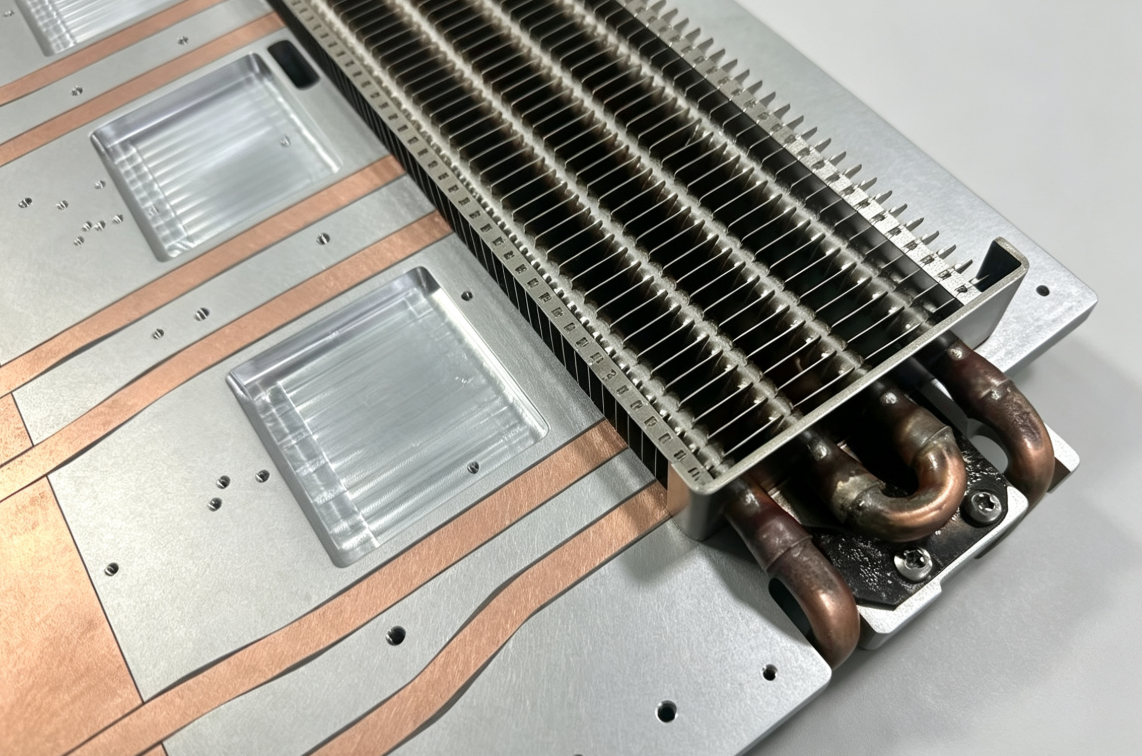
The core innovation of this solution is the deep integration of liquid cooling plate and heat exchanger, which subverts the traditional split design of externally hung heat exchangers. The finned heat exchanger is accurately welded and fixed in the middle section of the internal copper tube of the liquid cooling plate, realizing the integration of heat conduction carrier and heat exchange terminal in one structure. Through high-precision solder paste high-temperature welding process, the heat exchanger fin structure, copper tube and liquid cooling plate aluminum base form tight metallurgical bonding, completely eliminating multi-layer contact thermal resistance caused by traditional assembly. During equipment operation, the heat collected by the liquid cooling plate is quickly transmitted to the built-in heat exchanger through the copper tube, and the fan performs forced convection to quickly take away the heat gathered by the heat exchanger, forming an efficient and stable integrated heat dissipation cycle of liquid cooling plate heat collection and heat exchanger convection heat dissipation.
3. Core Manufacturing Process: High-Conductivity Solder Paste Welding
The solder paste high-temperature welding process is the key process to realize the integrated molding of liquid cooling plate and heat exchanger, and also the core guarantee for low thermal resistance and high structural stability of the system. Different from traditional screw fastening and glue bonding processes, this welding technology can realize seamless connection between dissimilar metals of aluminum and copper, effectively solving the problem of poor fitting and high interface thermal resistance of traditional assembly structures.
In the production process, all fitting surfaces of the liquid cooling plate aluminum base, embedded copper blocks, copper tube flow channels and heat exchanger fins are precisely polished, degreased and anti-oxidized to ensure flat and clean contact surfaces. Uniform high-thermal-conductivity solder paste is coated on each bonding interface, and integral constant-temperature high-temperature welding is carried out after precise positioning. The cured solder paste fully fills the tiny gaps between structural parts, realizes zero-gap fitting of the liquid cooling plate and built-in heat exchanger, minimizes system thermal resistance, and greatly improves the overall structural strength and air tightness.
Practice verification shows that the solder paste welding process can reduce the overall interface thermal resistance of the liquid cooling plate heat exchanger system by more than 30% compared with traditional processes. The integrated welded structure has strong oxidation resistance and shock resistance, can operate stably for a long time in high and low temperature alternating and high-load working environments, and significantly prolongs the service life of the thermal management system.
4. Core Advantages of Integrated Liquid Cooling Plate and Heat Exchanger Solution
4.1 High Structural Integration, Eliminate Redundant Accessories
Traditional liquid cooling thermal systems need to be equipped with independentheat exchanger, connecting pipelines, sealing joints and fixed brackets, with numerous scattered accessories and low structural integration. The innovative integrated design in this paper embeds the heat exchanger directly inside the liquid cooling plate, completely eliminating all external redundant connecting accessories and independent heat exchange modules. The entire heat dissipation system is only composed of integrated liquid cooling plate and cooling fan, which realizes ultra-simplified structural configuration and fundamentally avoids structural looseness and assembly failure risks caused by excessive accessories.
4.2 Simplify Assembly Process and Reduce Comprehensive Cost
The split liquid cooling plate and heat exchanger structure requires multiple complex processes such as pipeline butt joint, heat exchanger installation, sealing detection and bracket fixing, with cumbersome assembly steps, high manual dependence and high defective rate. The integrated liquid cooling plate with built-in heat exchanger is integrally formed in the factory, and the on-site installation only needs overall fitting and fan docking, which reduces assembly procedures by more than 60%. It effectively saves labor costs and time costs for mass production, and reduces the after-sales maintenance cost caused by assembly errors.
4.3 Ultra-Compact Size, Adapt to Miniaturized Equipment
The external arrangement of traditional heat exchangers and connecting pipelines will occupy a large amount of equipment internal space, which restricts the miniaturization and integrated design of high-power equipment. This solution uses the internal space of the liquid cooling plate to embed the heat exchanger without any external protruding structure. The heat collection and heat exchange functions are all completed inside the plate body, which greatly improves the space utilization rate of the thermal system. It is very suitable for compact installation scenarios such as embedded industrial control equipment, vehicle-mounted energy storage equipment and miniature high-power servers.
4.4 Shorten Heat Conduction Path and Improve Heat Dissipation Efficiency
The split structure of independent liquid cooling plate and external heat exchanger has multi-layer assembly interfaces, resulting in superposition of thermal resistance and serious heat loss. Relying on the integrated solder paste welding process, the copper block, aluminum plate, copper tube and heat exchanger of this solution realize seamless metallurgical combination, the heat conduction path is optimized to the shortest, and the overall thermal resistance of the system is minimized. The heat collected by the liquid cooling plate can be quickly transferred to the heat exchanger and dissipated by forced convection, maintaining efficient and stable heat dissipation performance under long-term high-load operation.
4.5 High Structural Stability and Low Operation and Maintenance Cost
The integrated welded liquid cooling plate and heat exchanger structure has no loose parts and hidden dangers of pipeline falling off, with excellent air tightness, shock resistance and environmental adaptability. It avoids common faults of traditional split systems such as pipeline aging, joint liquid leakage and accessory looseness. The highly integrated structure greatly reduces the later operation and maintenance difficulty, ensures the long-term stable operation of equipment thermal management system, and reduces the overall life cycle cost.
5. Application Scenarios and Engineering Value
The integrated liquid cooling plate and heat exchanger thermal solution has wide engineering applicability, covering high-power and compact heat dissipation fields such as industrial high-power computing equipment, energy storage converters, new energy vehicle electronic control systems, high-end servers, laser processing equipment and medical high-power instruments. It solves the dual pain points of insufficient heat dissipation of air cooling and bulky structure of split liquid cooling, and realizes the perfect balance of high heat dissipation performance, small space occupation and low comprehensive cost.
In industrial engineering applications, this optimized liquid cooling plate heat exchanger integrated structure can be flexibly adjusted in plate size, copper tube specification and heat exchanger fin area according to equipment power and installation space, with strong versatility and scalability. It provides a new efficient and compact thermal management design scheme for the miniaturization and high-power development of modern electronic and electrical equipment, and has high market promotion value and engineering practical significance.
6. Conclusion and Prospect
This paper optimizes and designs a high-efficiency thermal management system based on the integrated structure of liquid cooling plate and heat exchanger. Adopting 600×400×20mm aluminum plate as the base, matching embedded copper block heat conduction reinforcement and Φ9.52mm standard copper tube flow channel, and combining high-precision solder paste welding process, the solution realizes the integrated molding of liquid cooling heat collection and heat exchange heat dissipation. It completely abandons the redundant structure of external independent heat exchanger and connecting pipelines, effectively compresses the overall size of the cooling system, simplifies assembly and maintenance, reduces system thermal resistance, and significantly improves the heat dissipation efficiency and operational stability of high-power equipment.
As a high-integration, low-cost and high-reliability thermal solution, the integrated liquid cooling plate with built-in heat exchanger fully conforms to the development trend of miniaturization and high power density of industrial equipment. In the follow-up research, the flow channel layout and heat exchanger structure parameters can be further optimized to improve the heat dissipation limit, so as to adapt to higher-grade high-power thermal management application scenarios and provide continuous technical support for the upgrading of industrial cooling systems.