
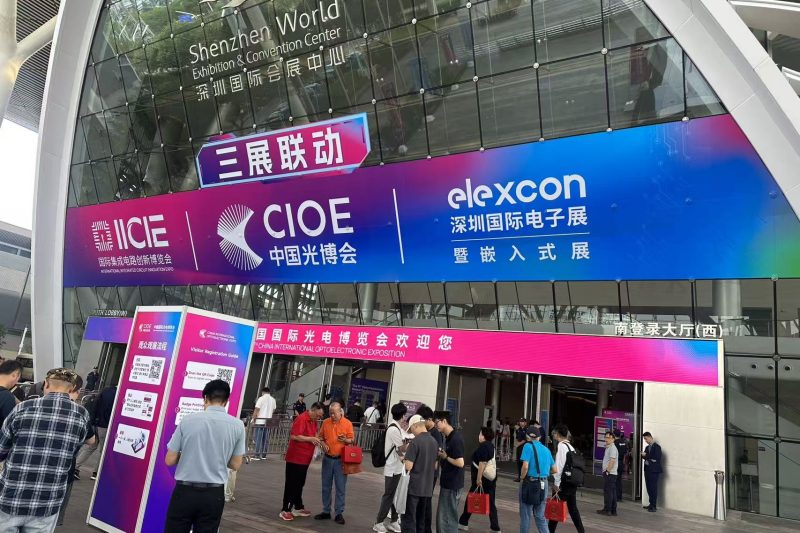
CIOE 2026: AI & Optoelectronics Converge — High-Density Computing Demands a Full-Stack Thermal Management Solution.
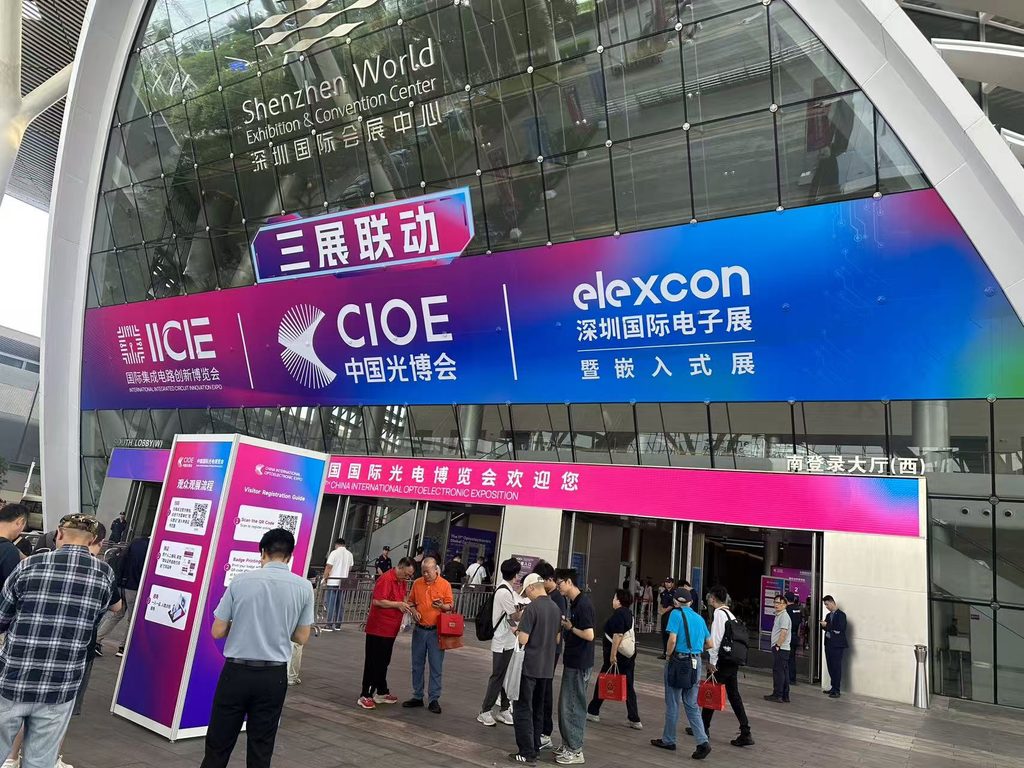
The 27th China International Optoelectronic Expo (CIOE 2026) has entered its second day. Under the theme of “AI Empowering the New Evolution of Optoelectronics,” the show brings together global optoelectronics manufacturers to unveil cutting-edge products across the full industry chain — from core materials and optical chips to high-speed optical modules, intelligent sensing, and precision manufacturing equipment.
On the second day, on-site professional visitor traffic kept rising, with 65,454 new domestic attendees and 1,306 overseas professional buyers, totaling 101,152 arrivals for the day. Across the three co-located exhibitions, cumulative visitors surpassed 165,003.
The core theme of this year’s show is the shift of AI and optoelectronics from concept to large-scale engineering application. As exascale supercomputing clusters continue to expand and large language models iterate rapidly, the pressure on bandwidth, power consumption, and thermal density in computing hardware has surged simultaneously. Traditional copper interconnects can no longer match ultra-high-bandwidth requirements, making “optics replacing electricity” a consensus across the computing infrastructure industry. 800G optical modules have now reached mass production, 1.6T products are accelerating to market, and next-generation interconnect solutions such as LPO, CPO, NPO, and optical circuit switching (OCS) are moving from lab validation toward volume production.
As high-speed optical interconnect breaks through bandwidth limits, the high heat flux generated by dense hardware places stringent demands on thermal management. Kenfa Tech, as a full-stack thermal management provider, delivers high-performance Liquid cold plates, heat pipe heat sinks, and TEC thermoelectric cooling modules, purpose-built for high-power equipment such as AI optical modules, BESS energy storage, and AI computing servers. TEC modules provide precise, micron-level temperature control for high-speed optical modules, stabilizing laser wavelength and suppressing wavelength drift that causes bit errors — solving both sustained heat dissipation and precise temperature control in high-density computing hardware.
New Product Releases in Optical Interconnect Drive Rising Thermal Management Demand in Computing Hardware
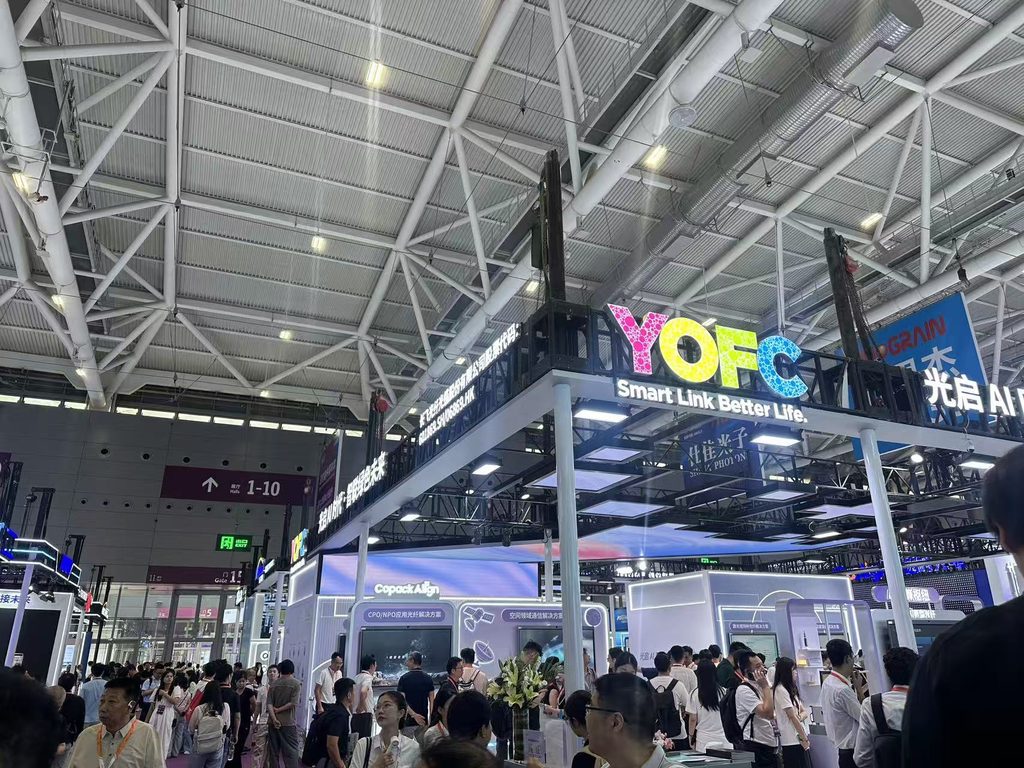
The optical interconnect sector featured dense new product launches this year, spanning the full chain from process platforms and optical chips to optical components, optical modules, and testing equipment. GlobalFoundries unveiled a silicon photonics process platform for CPO, NPO, and OIO applications; Guanglian Xinke launched a maskless programmable silicon photonics lithography tool, accelerating silicon photonics chip prototyping. At the chip level, Laoying Semiconductor, Xinsi Jie, and Sailor Photonics released PD chips and PIC transmitter chips targeting next-generation high-speed interconnect. At the component level, Murata, Hengtong Optoelectronics, and Accelink (Huagong Zhengyuan) showcased supporting silicon capacitors, hollow-core optical fiber, and optical frequency comb light sources.
Optical module vendors also delivered major technology demonstrations: Accelink showcased single-wavelength 400G technology supporting 3.2T pluggable optical module validation, while CIG (Cambridge Industries Group) launched a 1.6T OSFP optical module. Companies such as Wanli Eye and UTSTARCOM introduced full-link optoelectronics testing platforms to verify high-speed optical component performance.
As the power density of CPO, 1.6T, and 3.2T optical modules increases significantly, air cooling approaches its performance ceiling, and passive cooling alone cannot meet the wavelength stability requirements of laser diodes. A combined thermal solution of Liquid cold plates plus TEC modules has become key to ensuring long-term, reliable hardware operation. Kenfa Tech’s custom liquid cold plates support multiple processes including friction stir welding (FSW) and vacuum brazing, are developed to customer 2D/3D drawings, undergo pressure leak and thermal performance testing, and are compatible with water-glycol coolant. Paired with TEC thermoelectric cooling modules, the solution delivers closed-loop, precise temperature control for laser diodes inside optical modules, eliminating wavelength drift caused by ambient temperature fluctuations and meeting the strict reliability requirements of optical modules and BESS storage systems.
AI Rebuilds Intelligent Sensing: From “Imaging” to “Understanding,” Driving Heat Dissipation Demand Across Scenarios
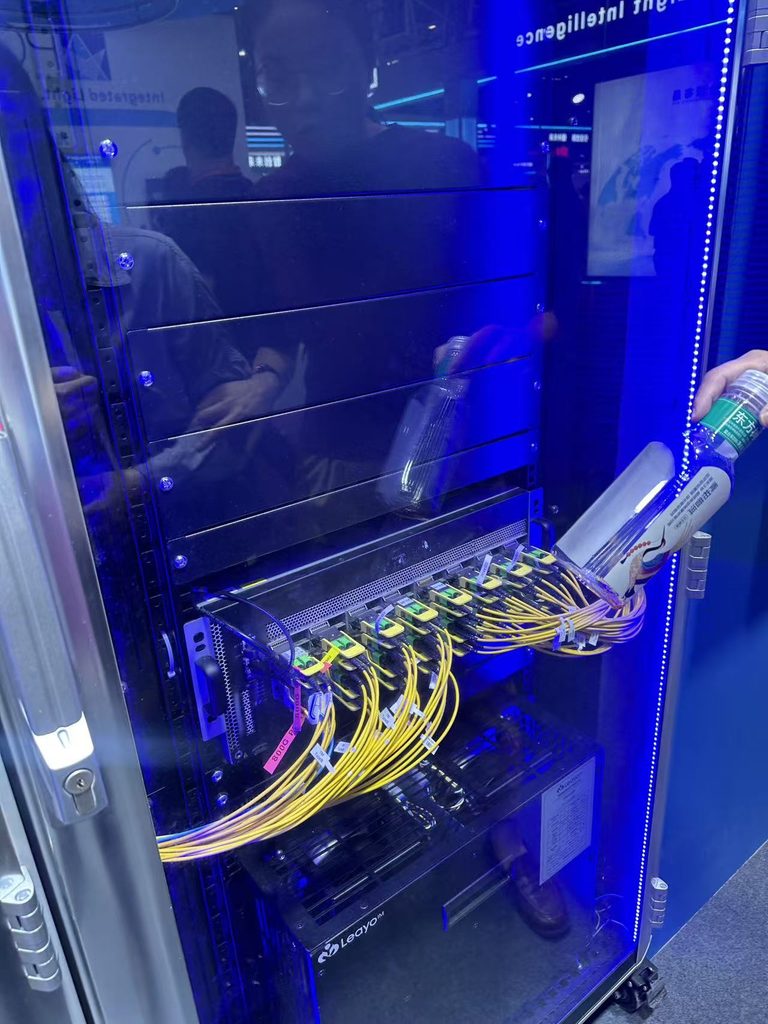
The huge appetite of AI large models for high-quality multimodal data is driving comprehensive upgrades of front-end sensing hardware. Imaging systems no longer merely pursue high-definition capture; instead, they leverage AI to enable real-time recognition and analysis, evolving from passive recording to proactive perception. Technologies such as hyperspectral imaging, 3D vision, LiDAR, infrared detection, and AR/VR near-eye displays are rapidly commercializing, with wide deployment in industrial inspection, autonomous driving, medical diagnostics, and robotics.
This year’s show featured a wave of new sensing hardware releases: Zhigan Guangzhui launched an AI spectral chip with supporting detection equipment; Qiu Shi Spectrum and Gaopu Imaging introduced multispectral and hyperspectral imaging systems; RayVal and Juxin Micro presented optical imaging sensors. In the infrared sector, Guide Infrared, Dali Technology, Raytron Micro, and Guangzhi Technology unveiled dual-color cooled infrared cores and multispectral optoelectronic systems, continuously improving infrared detection resolution and environmental adaptability. In the AR/VR track, Crystal-Optech, Biel Crystal, and Mengtong Intelligent launched near-eye display solutions based on optical waveguides, Micro-LED, and UTG ultra-thin glass.
These high-power optoelectronic sensing devices likewise demand stable, reliable thermal management. Kenfa Tech’s full-stack thermal solution extends beyond liquid cold plates to include heat pipe heat sinks and TEC temperature-control modules, providing thermal control for hyperspectral cameras, infrared cores, and AR optical modules — managing hot-spot temperatures to ensure imaging stability.
AI Empowers Precision Optoelectronic Manufacturing, Smart Manufacturing Drives Thermal Management Equipment Demand
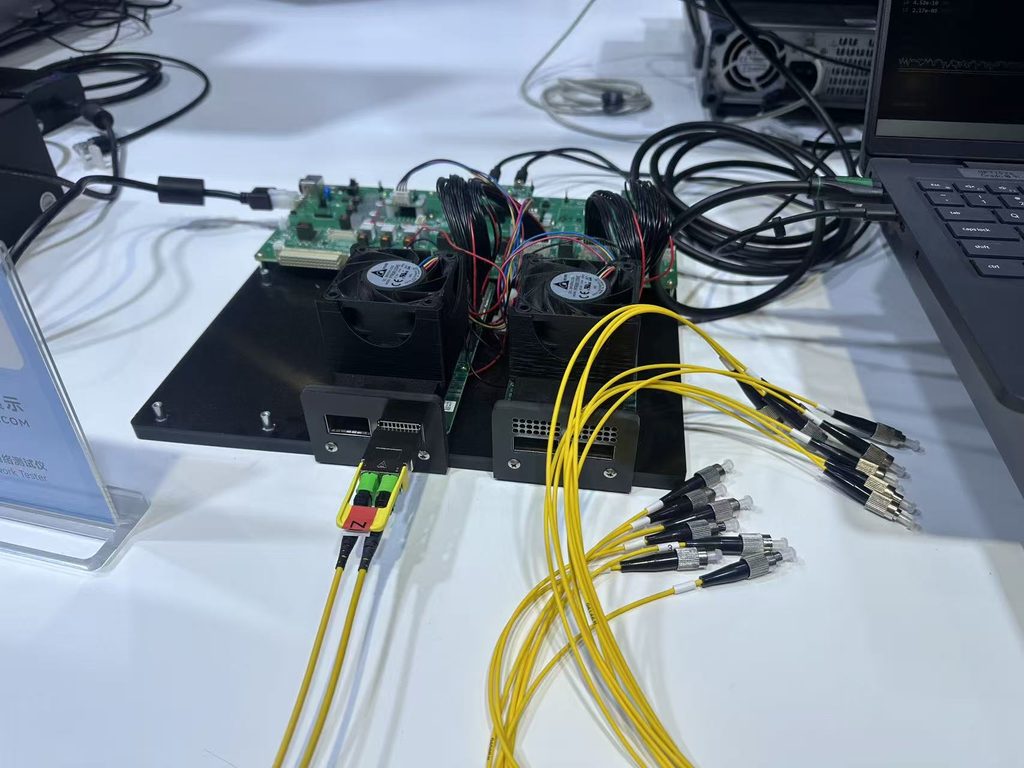
AI is not only transforming optoelectronic end products but also reshaping how optoelectronic devices are manufactured. Photonic chips and optical components require nanometer- and micron-level tolerances, where traditional manual tuning and batch inspection struggle to balance yield and efficiency. AI algorithms now intervene across optical simulation, laser processing, and in-line optical metrology: AI-assisted optical design shortens R&D cycles; AI-driven real-time adjustment of laser processing parameters improves welding and cutting yield; AI vision inspection combined with 3D optical measurement identifies micro-defects in real time and predicts process trends.
At the show, Dazu Tiancheng and Pinzuan Laser launched blue laser and femtosecond laser systems; Jingdian Optoelectronics and QiYang Optics presented white-light interferometers, film thickness gauges, and nano-roughness measurement equipment; Zolix and Yibei Technology showcased solar simulators and AOI automated optical inspection systems.
Precision laser equipment and optical inspection instruments generate concentrated heat during continuous operation, requiring custom heat sinks and liquid cold plates to maintain equipment accuracy. Kenfa Tech offers custom thermal management development for optoelectronic manufacturing equipment, delivering one-stop service from thermal simulation and prototype sampling through volume production.
Conclusion
CIOE 2026 fully demonstrates the broader industry trend of AI-optoelectronics convergence: high-speed optical interconnect builds the computing foundation, intelligent sensing expands application boundaries, and AI-driven smart manufacturing elevates industry productivity. As thermal flux density in high-density optoelectronic hardware continues to grow, professional thermal management is no longer an optional add-on but an essential foundation for reliable product operation.
As a full-stack thermal management company, Kenfa Tech specializes in the R&D and production of Liquid cold plates, TEC thermoelectric cooling modules, and heat pipe heat sinks, providing custom thermal solutions for AI computing, optical communication modules, BESS energy storage, and optoelectronic inspection equipment. We support everything from prototype development to high-volume production, with pressure testing and thermal performance characterization, tailored to overseas project requirements. For inquiries about heat sinks and liquid cold plates, please send emails to king@kenfatech.com.