1,Introduction
New Liquid Cooling Standards for GPU Data Centers.China’s data center liquid cooling industry is rapidly expanding for high-density computing and carbon reduction targets. Two new national standards, GB/T 48204-2026 and GB/T 48023-2026, were released synchronously under the same technical committee SAC/TC28. They form a complementary two-tier framework: one for liquid cooling components and the other for complete cold plate liquid cooling systems.
These standards mark a critical milestone as the liquid cooling sector moves from demonstration trials to large-scale commercial deployment. GB/T 48204-2026 establishes reliability benchmarks for individual components, while GB/T 48023-2026 governs system integration and on-site delivery. Combined, they create an end-to-end quality chain from hardware manufacturing to data center engineering.
2. Overview of GB/T 48204-2026
GB/T 48204-2026, Information technology — Technical specification of liquid cooling components for servers and storage equipments, is a component-level product specification.
It defines technical requirements, quality assessment procedures, marking, packaging, transportation and storage, plus corresponding test methods. It applies to the design, manufacturing and testing of liquid cooling components used in single-phase liquid cooling systems.
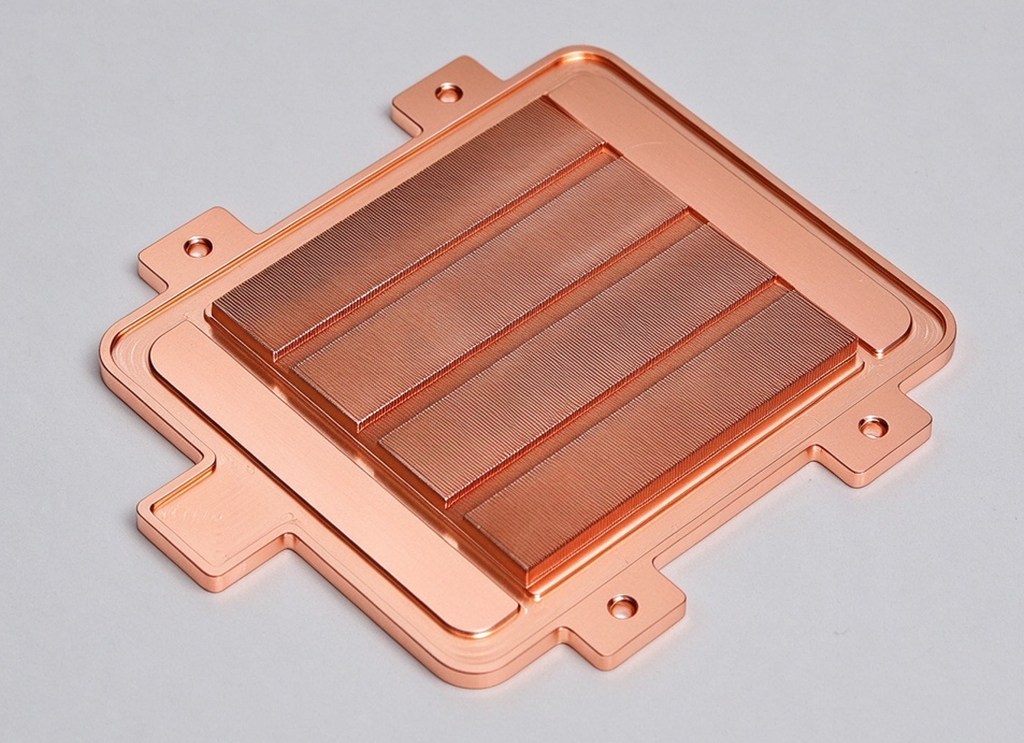
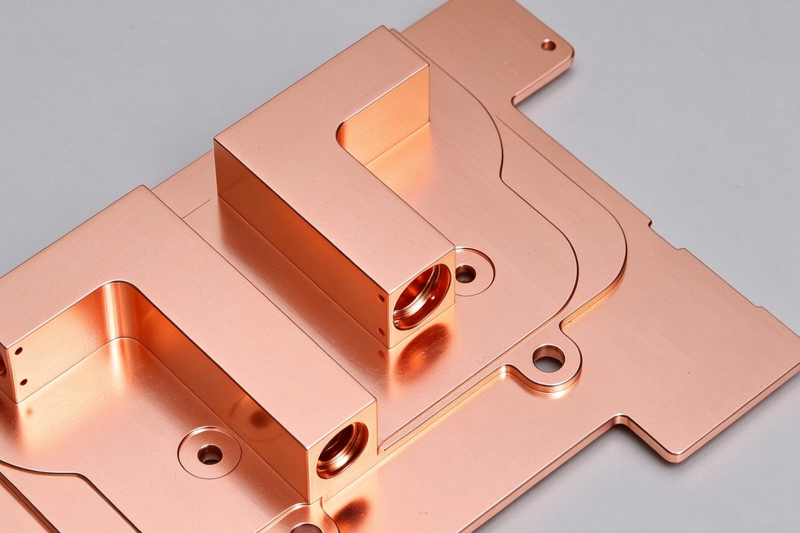
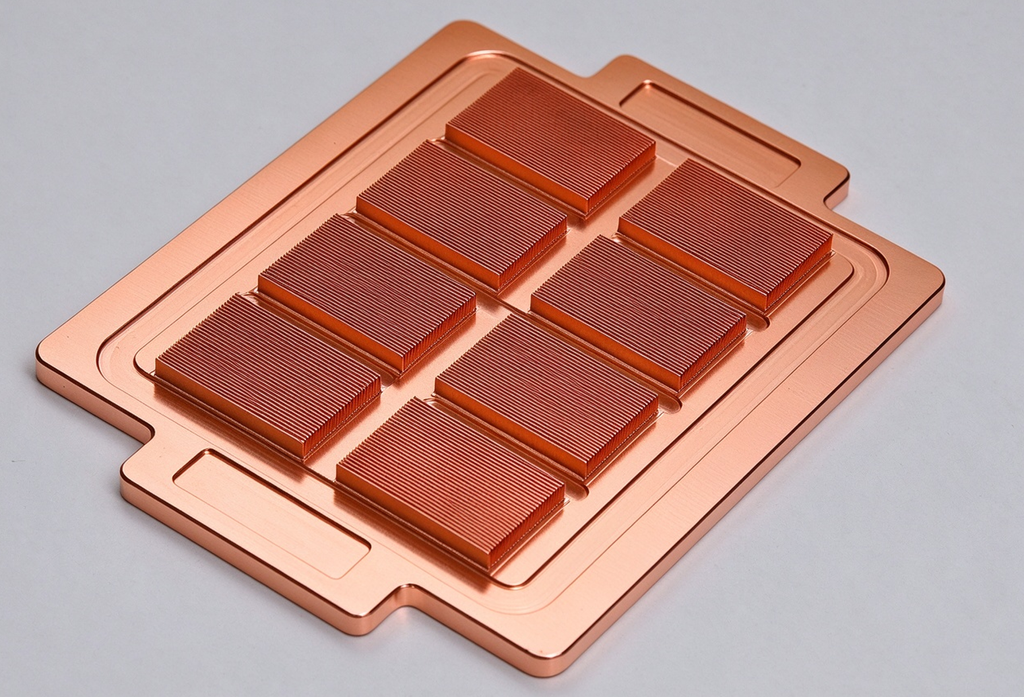
Covered parts include cold plate assemblies, immersion cooling assemblies, quick-disconnect couplings, manifold piping and CDU (Cooling Distribution Unit). The drafting group is dominated by server OEMs and component suppliers, including Inspur, H3C, Lenovo, Intel, Super Fusion, Huawei, Sugon and other thermal vendors.
3. Overview of GB/T 48023-2026
GB/T 48023-2026, Technical specifications for cold plate liquid cooling system of data center, is a system-level technical specification.It specifies system architecture, technical requirements and test methods for full cold plate liquid cooling deployments. It covers design, manufacturing, installation and maintenance, and explicitly excludes phase-change cold plate systems.The standard governs integrated systems consisting of primary and secondary cooling loops, including cold plates, quick connectors, manifolds, piping, CDU and chillers. It regulates supply temperature, heat exchange capacity, group control, installation pressure holding, flushing and coolant water quality. Its drafting participants are mainly data center infrastructure firms, system integrators, HVAC suppliers and cloud operators such as Sugon, Schneider, Kstar, Huawei Digital Power, Alibaba and Baidu.
4,Basic Standard Information Comparison
| Item | GB/T 48204-2026 | GB/T 48023-2026 |
|---|---|---|
| Full Standard Name | Information technology — Technical specification of liquid cooling components for servers and storage equipments | Technical specifications for cold plate liquid cooling system of data center |
| Release Date | 2026-09-28 | 2026-07-30 |
| Implementation Date | 2027-04-01 | 2027-02-01 |
| Committee | SAC/TC28 | SAC/TC28 |
| Standard Level | Component-level product specification | System-level technical specification |
| Document Scale | ~63 pages, 9 chapters + 7 appendices | ~23 pages, 7 chapters + 2 appendices |
| Scope | Liquid cooling components for servers & storage | Complete cold plate liquid cooling systems for data centers |
5,Core Boundary: Component vs System
The fundamental difference lies in specification granularity.
5.1 GB/T 48204-2026 treats individual liquid cooling hardware as the control unit. It defines acceptance criteria for factory release: what performance metrics, tests and quality checks are required for a single cold plate, quick coupling or CDU before shipment. It is built for manufacturing and component quality validation.
5.2 GB/T 48023-2026 treats the assembled liquid cooling loop as the control unit. It defines how primary and secondary loops are arranged, operating temperature limits, hydraulic balancing, on-site flushing, group control and long-term maintenance. It serves system integrators and on-site engineering delivery.
5.3 Cooling Technology Coverage
- GB/T 48204-2026 covers two single-phase liquid cooling routes: cold plate cooling and immersion cooling. Appendices define the assembly structure of cold plate modules, immersion modules and CDU units.
- GB/T 48023-2026 only covers single-phase cold plate liquid cooling, and does not apply to phase-change cold plate systems. The component standard has a wider scope, while the system standard is tightly focused on rack-mounted cold plate deployments.
5.4 Workflow Relationship in the Liquid Cooling Ecosystem
The two standards operate sequentially in industrial projects. GB/T 48204-2026 verifies whether incoming components are qualified. GB/T 48023-2026 verifies whether the assembled system can meet operational targets.
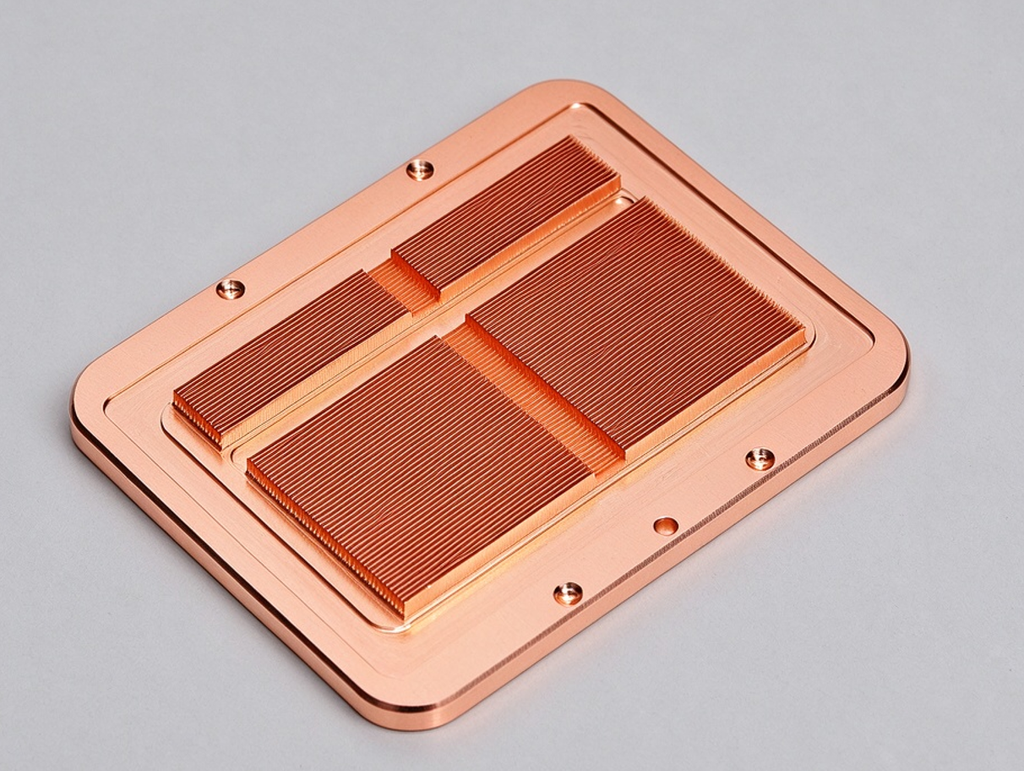
They overlap on CDU, cold plate assemblies, quick connectors and coolant media. Engineering projects must reference both standards together to guarantee end-to-end quality.
6,Structure & Chapter Framework Comparison
| Dimension | GB/T 48204-2026 (Component) | GB/T 48023-2026 (System) |
|---|---|---|
| Core Chapters | Scope, normative references, terms, component composition, technical requirements, test methods, quality assessment, marking, packaging, storage & transport | Scope, normative references, terms, system composition, technical requirements, test methods, appendices |
| Technical Logic | Design → material → appearance → fitting → performance → compatibility → corrosion → mould → EMC → restricted substances | General requirements → subsystem components → overall system performance |
| Quality & Inspection | Independent quality assessment chapter: type test, batch test, periodic AQL sampling | No component-level inspection scheme; acceptance based on system performance test and site commissioning |
| Delivery Focus | Packaging, protection, storage and shipping rules | Installation, pressure holding, flushing and construction acceptance (Appendix B) |
| Special Appendices | Cold plate / immersion / CDU assembly, coolant parameters, thermal and flow calibration tests | Secondary coolant specification, on-site pressure holding and flushing procedure |
The structural difference reflects their positioning. The component standard emphasizes factory reliability and full-lifecycle component validation, hence its longer length and detailed sampling rules. The system standard focuses on integration performance and site acceptance, with dedicated appendices for coolant quality and construction workflows.
7. Core Technical Requirements Comparison
7.1 Design & General Constraints
GB/T 48204-2026 sets quantified design margins for individual hardware. Cooling capacity shall reserve no less than 10% design redundancy. It limits maximum flow velocity: 1.5 m/s for cold plate channels and 4 m/s for CDU secondary loops. It also defines mechanical constraints for cold plate flatness and thermal load matching.
GB/T 48023-2026 defines system-level layout rules: valve arrangement, leak detection placement, filter precision (≥50 μm for secondary side, ≥300 μm for primary side), drain slope ≥0.003, CDU maintenance clearance and raised floor height ≥600 mm.
7.2 Material & Surface Specification
Both standards recommend 304 / 316 stainless steel for wetted metal piping and EPDM / PTFE for flexible hoses. Thread seal tape and thread glue are prohibited for coolant loops.
GB/T 48204-2026 further specifies material grades for each component, including FVMQ/EPDM for quick couplings. It explicitly prohibits direct contact between pure copper and aluminium alloy inside the same loop, and sets tight geometric tolerances such as cold plate base flatness ≤0.1 mm.
GB/T 48023-2026 focuses on system-wide corrosion compatibility, weld inspection and visual acceptance for assembled pipelines.
7.3 Performance Metrics
Performance limits are the most obvious differentiator. GB/T 48204-2026 calibrates component boundaries: cold plate thermal resistance, hydraulic curve, sealing (2× / 3× MAWP helium leak test ≤1×10⁻⁵ Pa·m³/s), Kv value and coupling durability (minimum 1000 mating cycles).
GB/T 48023-2026 defines steady-state system operating windows: secondary supply temperature (dew point +3 ℃ ~ 40 ℃), supply-return temperature difference 5 ℃ ~15 ℃, branch flow imbalance ≤10%, and total system heat capacity ≥95% of design load.
7.4 Reliability & Environmental Resistance
GB/T 48204-2026 contains extensive environmental reliability test clauses: operating temperature range 570℃ for cold plate and CDU random vibration, 500 m/s² shock, packaging drop, 48 h salt spray, 28-day mould resistance, 60-day 70 ℃ closed-loop material compatibility test and corrosion mass loss ≤10 mg. It also regulates CDU power consumption: ≤10% for air-liquid CDU and ≤2% for liquid-liquid CDU.
GB/T 48023-2026 does not run component environmental tests. Its reliability mechanisms are built on system protection: leak detection, alarm interlock, online filter replacement and N+X group control failover.
7.5 System Integration & Operation
GB/T 48023-2026 covers exclusive system operation topics: chiller selection based on 20-year extreme wet-bulb conditions, group control logic, secondary coolant water quality (Appendix A), and mandatory ≥24 h circulation flushing before acceptance. It references Chinese construction and HVAC standards including GB 50242, GB 50243 and GB 50738.GB/T 48204-2026 stops at component delivery and factory validation, and does not cover on-site deployment or runtime maintenance.
8,Quantified Benchmark Comparison for CDU, Cold Plate and Quick Couplings
| Comparison Item | GB/T 48204-2026 (Component) | GB/T 48023-2026 (System) |
|---|---|---|
| CDU Heat Performance | Rated thermal performance defined by boundary curve | Actual heat capacity ≥95% of design load |
| CDU Temperature Control | Supports temperature regulation, constant pressure / flow, power-off memory & auto-restart | Steady supply temp deviation ≤±1 ℃; secondary flow adjustable from 30% to 100% |
| CDU Sealing | No leakage under 3× MAWP; safety valve opens ≤1.15× MAWP | Pressure hold test at 1× MAWP for 1 h, record pressure drop |
| Cold Plate Assembly | Thermal resistance at minimum boundary value; helium leak ≤1×10⁻⁵ Pa·m³/s at 2/3 MAWP | Flow resistance consistency across identical cold plates, tolerance ±100%; pressure drop drift ≤2% |
| Quick Disconnect Coupling | Kv value validated; ≥1000 insert cycles; leakage limit per size | No leakage under pressure; bubble-tight; cross-vendor interchangeable with colour marking |
| Flow Uniformity | Flow deviation for liquid cooling hardware within one rack <10% | Max/min branch flow ≤10% of average flow on secondary loop |
8.1 Unique Indicators of GB/T 48204-2026
- Cold plate base flatness ≤0.1 mm
- Leak detection resolution ≤0.5 mL
- Closed-loop material compatibility test ≥60 days
- Corrosion mass loss ≤10 mg
- 28-day mould resistance (class 2a)
- 48 h salt spray test (class 9)
- CDU power consumption cap: air-liquid ≤10%, liquid-liquid ≤2%
- Coupling connection force: 69~235 N for different bore sizes
8.2 Unique Indicators of GB/T 48023-2026 - Minimum secondary supply temperature: dew point +3 ℃
- Supply-return temperature difference: 5 ℃ ~15 ℃
- Primary valve full stroke ≤60 s (0~100%)
- Heat exchanger log mean temperature difference: 2 ℃ ~8 ℃
- N+X failover temperature fluctuation ≤±1 ℃
- Post-flushing coolant specification: conductivity ≤10 μS/cm, pH 5~7.5, turbidity ≤5 NTU
9,Test and Validation Method Comparison
| Dimension | GB/T 48204-2026 (Component) | GB/T 48023-2026 (System) |
|---|---|---|
| Test Level | Component qualification test (single unit, factory release) | System commissioning test (integrated bench or site) |
| Performance Test | Thermal resistance, hydraulic curve, pump boundary, Kv value and coupling cycle test with dummy load | System heat capacity, flow balance, temperature stability and group control failover test with simulated load |
| Reliability Test | High-low temperature, humidity cycle, vibration, shock, drop, salt spray, mould, compatibility and corrosion | No component environmental test; focus on leak localization, filter maintenance and water quality sampling |
| Ambient Test Condition | 10~35 ℃, 25~75% RH, 86~106 kPa | 15~35 ℃, 25~75% RH, 86~106 kPa |
| Instrument Accuracy | Follow referenced national standards such as GB/T 2423, GB/T 4857 | Thermometer ±0.1 ℃; flow meter class 0.5; pressure gauge class 0.2 |
This article is compiled based on public abstracts and official release information of GB/T 48204-2026 and GB/T 48023-2026. It is not a substitute for the full official standard text. The complete formal document can be purchased from China Standard Press.Kenfa tech designs and manufactures friction stir welded,brazing GPU cold plates aligned with the requirements of GB/T 48204-2026. If you require liquid cooling cold plate development and manufacturing for server and high-density computing projects, you can contact our engineering team for technical support king@kenfatech.com