
1. Introduction
Thermal design for heat sink and liquid cooling plates are a practice-driven discipline, and experience is critical to delivering reliable thermal solutions.Many thermal engineers follow a similar growth journey. When first getting into thermal design, most feel it is quite challenging. After finishing several projects and getting familiar with common design routines, they may think thermal design only follows a limited set of mature methods, heat sinks ,liquid cooling plates and every cooling problem can be solved.
If you receive positive feedback and support from colleagues and supervisors in the early stage of your career, it is easy to form a bias: believing you are already an expert in thermal design. You may promise to handle any thermal challenge and assume no cooling problem is unsolvable.
The longer you work in this field, the clearer one core truth becomes: thermal issues never exist in isolation. Without constraints, simply lowering component temperatures is not difficult. The real difficulty of thermal design lies in the fact that all solutions must work within defined boundary limits.
Thermal management relies on a wide range of components, sorted by function below:
| Heat Spreading & Conduction | Liquid Cooling System | Active Heat Dissipation | Special Functional Materials |
|---|---|---|---|
| Heat sinks | Cold plate | Fan | Insulation material |
| Heat pipes | Pump | Compressor | PCM (Phase Change Material) |
| Vapor Chamber (VC) | Heat exchanger | TEC (Thermoelectric Cooler) | |
| TIM (Thermal Interface Material) | |||
| High thermal conductivity material |
Material selection requires more than checking thermal property data sheets. We also need to evaluate long-term reliability and secondary risks introduced after integrating these parts into the complete system. Many of these risks are not temperature-related.
When we look at the full system, the variables multiply: chip power consumption, temperature specifications, package style, layout space, heat source concentration, EMC requirements, and more. Deep down, there are many coupled uncertainties within the system. The core task of a thermal design engineer is to identify all potential risks and find a suitable solution that balances cooling performance, cost, footprint and long-term reliability.These four constraint dimensions involve trade-offs with no universal standard and no standard answer:
| Dimension | Core consideration |
|---|---|
| Performance | Whether cooling can keep temperatures under control |
| Footprint | Whether the design fits inside the mechanical enclosure |
| Cost | Whether the solution supports mass production |
| Reliability | Whether the service life meets requirements |
Engineers need to make these judgement calls independently, and this is the most challenging part of thermal design.
2. The Cost of Poor Trade-off: Well-known Thermal Management Failure Cases
Public industry cases clearly show the severe consequences of improper balancing.
Samsung Galaxy Note 7 suffered thermal runaway of its battery and triggered a global recall with massive financial losses. The Inmoov AI glasses were recalled due to overheating, which seriously damaged brand reputation. Improper thermal design of EV battery systems has also caused thermal runaway incidents.
As power consumption in data centers rises exponentially, liquid cooling plates has grown rapidly. Even so, engineering issues such as blockage, leakage and uneven temperature fluctuation remain common. For NVIDIA’s newly announced OOI optical communication technology, its lead engineer directly pointed out that cooling is the toughest problem in this project.
All these top-tier products went through multiple rounds of thermal simulation, sample testing and design reviews before release. However, engineering cannot cover every possible coupled factor. Once the trade-off between performance, cost, footprint and reliability tilts too far, mass field failures may occur.
3. Heat: An Unavoidable Bottleneck for High-Integration Intelligent Systems
Heat is a special form of energy. Almost all other forms of energy eventually dissipate into heat.
| Energy Form | Conversion Result | Core Conclusion |
|---|---|---|
| Electric energy | Converts into heat eventually | Higher energy density and higher order of energy lead to more severe thermal challenges |
| Light energy | Converts into heat eventually | |
| Mechanical energy | Converts into heat eventually | |
| Chemical energy | Converts into heat eventually |
For all systems with high energy density and high energy order, thermal management is almost always a core bottleneck. Higher power density and higher integration are long-term trends for smart hardware, computing infrastructure and optoelectronic devices. We can expect thermal challenges to keep growing.
Therefore, mastering fundamental heat transfer theories, understanding coupling between different constraints, and knowing how to translate these limits into practical engineering solutions bring high value for thermal engineers, technical sales, management teams and investors.
AI tools are advancing quickly. I have invested significant time and resources to explore AI applications in thermal design. But based on real-world testing so far, AI-generated designs are not ready for engineering use, and incorrect outputs appear frequently.
Most importantly, AI lacks the balancing mindset we discussed. It cannot compete with experienced human engineers in multi-objective trade-off decisions. Many thermal recommendations from AI look logically rigorous on paper, yet they are misleading. Readers without solid thermal fundamentals and field experience may adopt these suggestions and end up with risky designs.
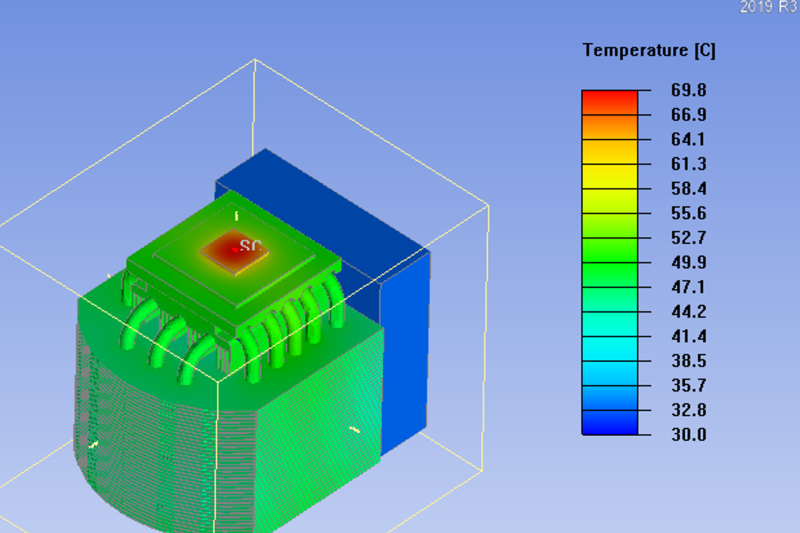
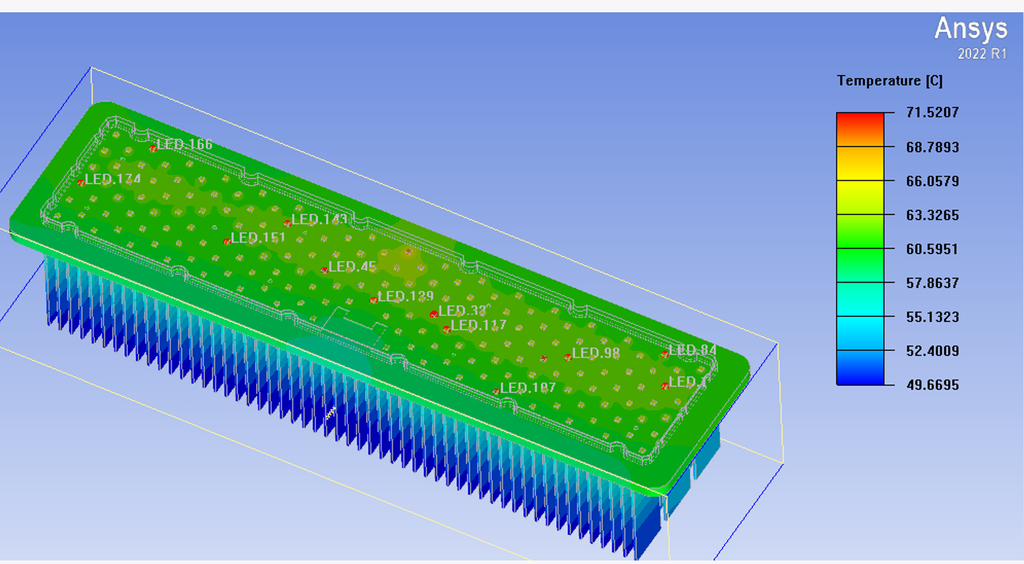
Kenfa Tech is a full-stack thermal management manufacturer. Our engineers hold 15 years of experience in thermal design and simulation analysis. We regularly arrange our team to join Ansys Icepak training sessions to follow newly released modules and learn advanced methods. This allows us to deliver better thermal solutions for our clients’ future projects.
4. What can kenfa tech can help your projects?
Thermal design is not just simulation work, nor is it simply picking thermal components. It is fundamentally an engineering discipline built on trade-offs. Simulation gives temperature predictions, and material datasheets list thermal conductivity values, but no tool can make the final trade-off decisions for engineers.As power density continues to climb, understanding heat and mastering the art of balance is a permanent lesson for all thermal management practitioners.so you can email to us king@kenfatech.com