
Abstract
With the continuous increase in heat flux density of high-power chips, power devices and microchannel heat dissipation systems,thermal interface material, the selection of thermal interface materials (TIMs) directly determines the heat dissipation efficiency and long-term operational stability of equipment. To clarify the engineering adaptation boundaries between two mainstream high-end thermal interface materials, namely graphite sheets and gallium-based liquid metals, this paper conducts a systematic comparative study from five dimensions: thermal conduction mechanism, core thermal performance, physical adaptability, process mass production performance and long-term reliability. Combined with the industrialization trend of high-end computing hardware, this paper emphatically analyzes the technical iteration logic of NVIDIA’s new-generation GPU platform, which completely abandons liquid metal and adopts high thermal conductivity graphite sheets on a large scale. The research results show that liquid metal possesses the advantage of ultra-low interfacial contact thermal resistance and is only suitable for small-batch scenarios requiring extreme heat dissipation. Benefiting from the anisotropic high thermal conductivity, excellent structural stability and mass production compatibility, graphite sheets can balance uniform heat dissipation performance and engineering application value, and have become the mainstream thermal interface solution for current high-power computing equipment. This study provides an engineering reference for the selection of thermal interface materials and the optimization of heat dissipation systems under high-density heat flux conditions.
1. Introduction
With the iteration of semiconductor chip manufacturing processes and the continuous improvement of power density, the heat flux density of high-end GPUs, AI computing chips and industrial power devices has increased significantly. Excessive interfacial thermal resistance and concentrated local hotspots have become the core bottlenecks restricting equipment heat dissipation performance. As key media for filling micro concave-convex gaps between heat sources and radiators, weakening air thermal insulation effects and building efficient heat transfer paths, thermal interface materials play a decisive role in the overall efficiency of heat dissipation systems.
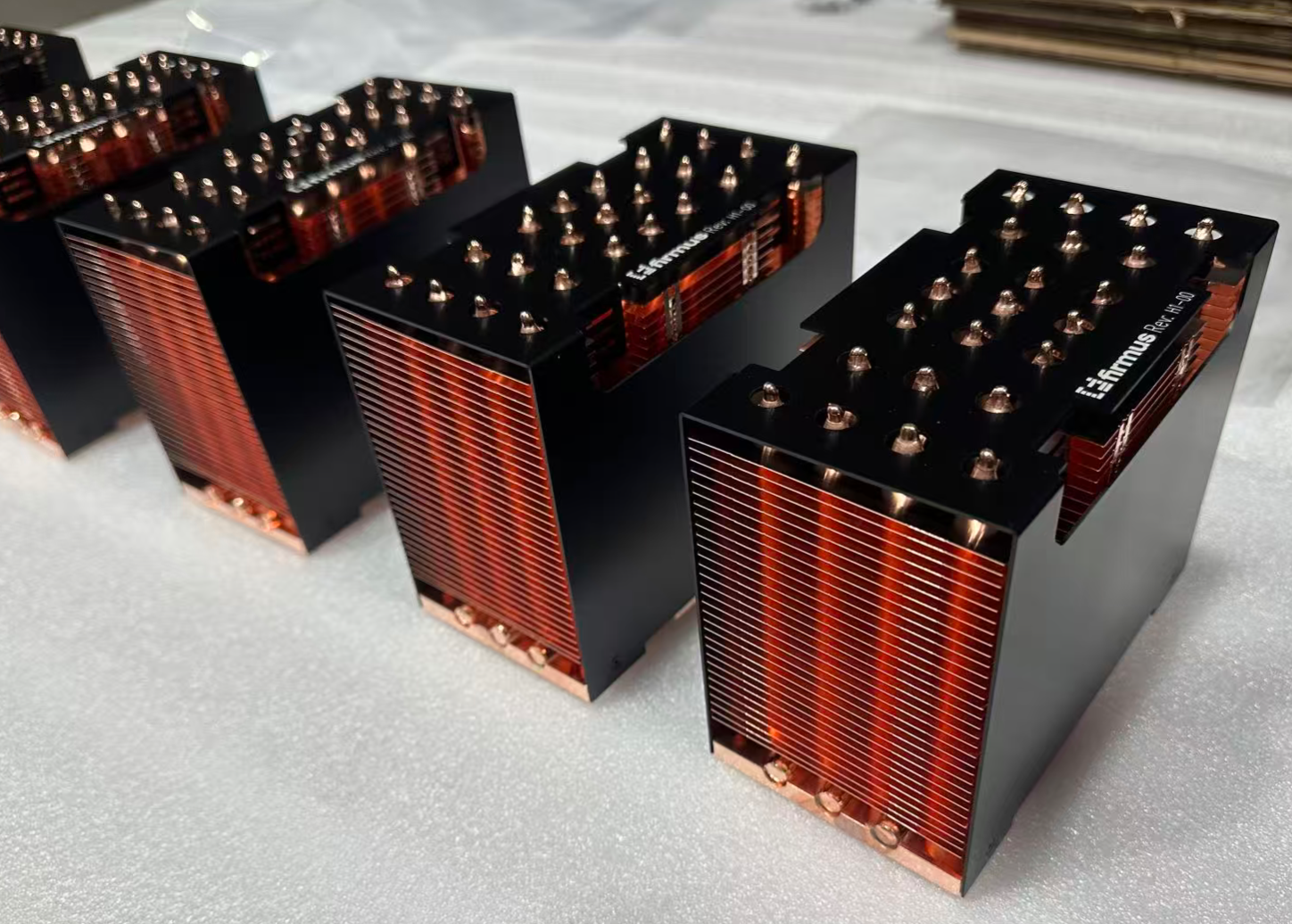
In the current commercial high-end thermal interface material system, artificially high thermal conductivity graphite sheets and gallium-indium-tin based liquid metals are two core high-performance solutions. For a long time, liquid metals have been applied in some high-end overclocking and military-grade extreme heat dissipation scenarios due to their ultra-low interfacial thermal resistance. In contrast, graphite sheets have been widely used in mass production of consumer electronics and industrial equipment relying on mature preparation processes and stable comprehensive performance. It is worth noting that with the upgrading of industrialization and large-scale demand for computing hardware, significant iterations have occurred in the industrial technical route. NVIDIA’s new-generation Rubin series high-end GPUs have officially abandoned liquid metal heat dissipation solutions and fully switched to high thermal conductivity graphite sheet thermal interface solutions, indicating that the industry has gradually transformed from “extreme heat dissipation” to an engineering-oriented direction focusing on the balance of performance, reliability and mass production. In the immersion heat dissipation scenario of high-end H200 computing chips, the advantages of this technical route have been fully verified. At present, the H200 dedicated immersion heat sink launched by SMC.CO and collaboratively developed by Kenfa Tech adopts high thermal conductivity graphite sheets as the core thermal interface material. Verified by actual working conditions, it can adapt to high-density immersion liquid cooling environments with stable heat dissipation performance and good adaptability, fully confirming the engineering application value of graphite sheets in high-end high-power computing equipment. Based on the above background, this paper systematically compares the comprehensive performance and application shortcomings of the two types of materials, and clarifies their applicable scenarios and selection criteria.
2. Comparative Analysis of Core Thermal Performance
2.1 Thermal Conduction Mechanism and Thermal Conductivity Characteristics
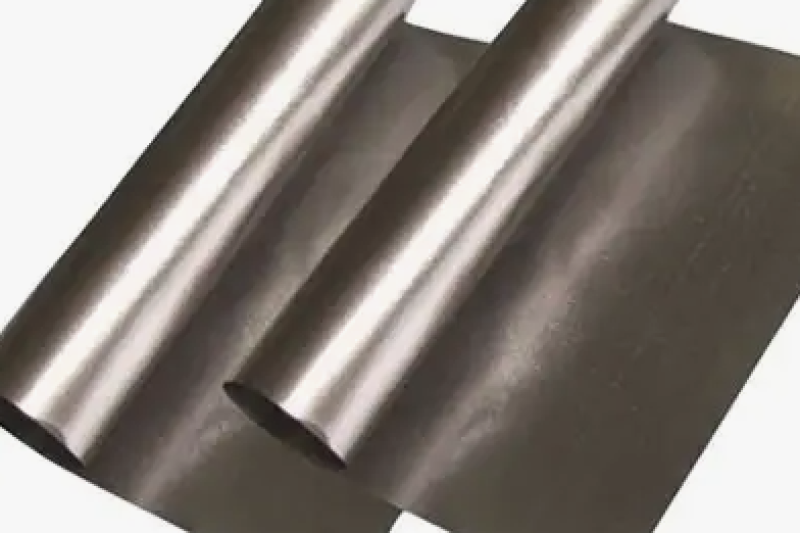
Artificial graphite sheets are typical anisotropic solid thermal conductive materials with regularly layered stacked carbon atoms inside, which enable extremely high in-plane free electron migration efficiency. The in-plane thermal conductivity of mainstream commercial high-end graphite sheets reaches 800~1500 W/m·K, and the thermal performance of modified composite graphite sheets can be further improved. Restricted by interlayer bonding force, the vertical thermal conductivity of graphite sheets is significantly reduced, ranging only from 10 to 30 W/m·K. Its core heat transfer characteristic is lateral rapid heat uniformity and local hotspot reduction, making it suitable for heat diffusion scenarios of large-area heat sources.
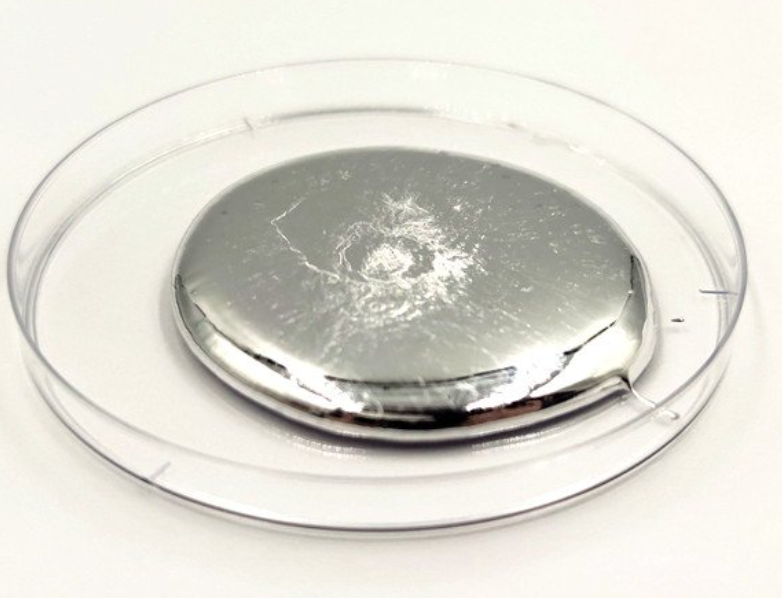
Gallium-based liquid metal is a room-temperature liquid alloy material without interlayer gaps of solid fillers, which realizes uniform heat transfer through free electrons with a stable thermal conductivity of 30~80 W/m·K and no anisotropic thermal performance difference. Compared with graphite sheets, liquid metals have no advantage in bulk thermal conductivity, but eliminate the fitting gap defects of solid materials. Their core advantage lies in the vertical interfacial heat transfer, which can effectively connect the heat transfer path between heat sources and radiators.
2.2 Interfacial Thermal Resistance and Heat Dissipation Adaptation Limit
Interfacial thermal resistance is the core index to evaluate the heat transfer capacity of thermal interface materials. As solid sheet materials, graphite sheets will retain a small amount of air thermal insulation layers after fitting due to the micron-scale roughness of substrate surfaces, resulting in a medium level of interfacial thermal resistance. They can stably adapt to conventional and medium-high power heat flux scenarios and meet the heat dissipation requirements of most commercial semiconductor equipment. Meanwhile, new modified graphite composite materials can achieve extremely low total interfacial thermal resistance through structural optimization, and their heat dissipation performance is gradually close to that of liquid metals.
Liquid metals possess excellent fluid wetting characteristics, which can seamlessly fill micro gaps of substrates and eliminate air thermal insulation layers to the maximum extent, achieving top-level interfacial contact thermal resistance among commercial thermal interface materials. Under ultra-high heat flux density and instantaneous high-load working conditions, liquid metals deliver better cooling effects than traditional graphite sheet solutions. However, this performance advantage is only limited to small-batch precision working conditions and cannot adapt to large-scale mass production scenarios.
3. Physical Adaptability and Substrate Compatibility Research
3.1 Structural Morphology and Interfacial Fitting Capacity
Graphite sheets are flexible solid thin sheets that can be customized into various regular shapes through die-cutting processes with certain bending adaptability, suitable for flat and regular heat source fitting interfaces. Under long-term high temperature, compression and thermal cycling working conditions, high-quality graphite sheets maintain good structural stability, with only slight deformation under extreme overload environments, which will not significantly affect the overall heat dissipation performance, adapting to conventional regular heat dissipation interfaces such as chips and power devices.
Liquid metal is a fluid material with no fixed shape, which can adapt to special-shaped interfaces, micro gaps and narrow-spacing structures, achieving excellent fitting effect in complex interface scenarios such as bare chips and special-shaped power devices. It maintains stable phase change characteristics without morphological mutation within the conventional operating temperature range. Nevertheless, the fluid form leads to inherent defects of easy flow and leakage, limiting its working condition adaptability.
3.2 Electrical Characteristics and Substrate Compatibility
Graphite sheets have dual characteristics of electrical and thermal conductivity with poor insulation performance. In practical applications, short-circuit risks can be effectively avoided by precise die-cutting to evade circuit pins and wiring areas, with controllable installation tolerance. Meanwhile, graphite sheets feature stable chemical properties, no oxidation and no corrosion under normal temperature and conventional high-temperature working conditions, and are compatible with all kinds of conventional heat dissipation substrates such as copper, aluminum and stainless steel, exhibiting excellent substrate compatibility.
Liquid metals have extremely high electrical conductivity with far higher short-circuit risks than graphite sheets, requiring extremely high packaging protection and alignment accuracy in application with very low fault tolerance. In addition, gallium-based liquid metals will undergo alloying penetration reactions with pure copper and ordinary aluminum alloys, causing substrate corrosion and failure during long-term operation. They are only applicable to metal substrates with protective treatments such as nickel plating and gold plating, resulting in strict limitations on heat dissipation structure materials and poor hardware adaptability.
4. Preparation Process and Engineering Mass Production Performance
4.1 Processing and Assembly Difficulty
The industrialization process system of graphite sheets is mature, supporting standardized die-cutting, film coating and back glue preprocessing, and adapting to automated assembly lines. The assembly process causes no overflow or residue with convenient rework and high yield, fully meeting the large-scale mass production needs of consumer electronics and high-end computing hardware, and serving as the mainstream mass-produced thermal interface solution in the current industry. The core reason why NVIDIA’s new-generation Rubin GPU platform abandons liquid metal solutions is that graphite sheets can perfectly balance heat dissipation performance and mass production efficiency, adapting to the large-scale shipment demand of high-end hardware.
Liquid metals have no fixed structure and cannot be prefabricated and standardized. Assembly relies on manual precise dispensing and scraping, with uncontrollable material dosage, which easily causes overflow, wall hanging and circuit pollution. Additional protective packaging procedures are required after assembly, resulting in high process complexity, long production cycle and incompatibility with automated mass production modes. It is only applicable to small-batch application scenarios such as laboratory equipment and high-end customized hardware.
4.2 Long-term Operational Reliability and Maintainability
Graphite sheets feature high and low temperature resistance, aging resistance, no volatilization and no medium loss. Their performance attenuation is negligible under wide temperature conditions of -40℃~120℃, and their service life is basically synchronized with the full service cycle of semiconductor equipment, realizing maintenance-free operation. They maintain excellent structural and thermal performance stability under long-term vibration and thermal cycling conditions, adapting to long-term continuous operation of equipment.
Liquid metals produce trace volatilization and penetration loss during long-term high-temperature operation, and easily absorb environmental impurities, leading to gradual attenuation of interfacial thermal performance. Under equipment vibration conditions, liquid metals face risks of displacement and leakage, which may cause hardware short-circuit, substrate corrosion and other failures, requiring regular inspection, supplementary coating and maintenance, resulting in high later operation and maintenance costs and insufficient long-term operational reliability of the whole machine.
5. Cost and Engineering Selection Strategy
5.1 Comprehensive Application Cost Analysis
Graphite sheets have moderate raw material costs and extremely low preprocessing, assembly and operation and maintenance costs, showing significant cost-performance advantages under large-scale mass production. They can effectively reduce the overall heat dissipation scheme cost of high-end computing hardware and industrial equipment with prominent industrialization landing advantages.
Liquid metals have high unit raw material prices, and their overall application cost is much higher than that of graphite sheets when superimposed with manual assembly, protective packaging and later maintenance costs. Limited by process characteristics, the cost cannot be reduced through large-scale production, making them only suitable for extreme heat dissipation scenarios with cost-insensitive requirements.
5.2 Scenario Adaptation and Selection Principles
Combined with performance, process, cost and industrial technical iteration trends, the accurate application scenarios of the two materials are clarified. Graphite sheets are applicable to high-end GPUs, computing chips, consumer electronics, industrial control power equipment and other core scenarios requiring large-scale mass production, long-term stable operation and balanced uniform heat dissipation and cost control, and are the mainstream industrialized selection in the current semiconductor industry.
Liquid metals are only applicable to special scenarios such as military aerospace, laboratory ultra-high power equipment and niche high-end customized hardware that pursue extreme instantaneous heat dissipation, adopt small-batch production and accept high operation and maintenance costs, with no universal industrial application value.
6. Comparison of Core Performance Parameters
|
Comparison Dimension
|
Graphite Sheet (Thermal Interface Material)
|
Liquid Metal (Thermal Interface Material)
|
|
Core Performance Advantages
|
High in-plane thermal conductivity, excellent heat uniformity effect, stable structure, good mass production performance, long-term maintenance-free
|
High interfacial fitting degree, ultra-low contact thermal resistance, excellent vertical instantaneous heat transfer performance
|
|
Inherent Performance Deficiencies
|
Low vertical thermal conductivity, slight limitations in micro-gap fitting
|
High electrical safety risk, metal substrate corrosion, complex process, poor reliability
|
|
Effective Thermal Conductivity
|
800~1500 W/m·K (in-plane anisotropy)
|
30~80 W/m·K (isotropy)
|
|
Interfacial Thermal Resistance Level
|
Medium; modified products can approach the level of liquid metal
|
Extremely low with excellent instantaneous interfacial heat transfer performance
|
|
Electrical Safety Characteristics
|
Conductive with controllable circuit risk avoidance and stable safety
|
Highly conductive with extreme short-circuit risk and difficult protection
|
|
Substrate Compatibility
|
Non-corrosive, compatible with all conventional substrates such as copper and aluminum
|
Corrosive to copper/aluminum substrates, only applicable to nickel-plated/gold-plated substrates
|
|
Mass Production Adaptability
|
Excellent, suitable for full-automatic large-scale mass production
|
Poor, only suitable for manual small-batch customized production
|
|
Service Reliability
|
Long-term stability at machine level, no performance attenuation, maintenance-free
|
Prone to loss and leakage, requiring regular maintenance and supplementary coating
|
|
Main Application Scenarios
|
High-end GPUs, computing chips, industrial mass-produced equipment, general heat dissipation scenarios
|
Military aerospace, laboratory high-power equipment, niche high-end customized scenarios
|
7. Conclusion
The multi-dimensional comparative study on graphite sheets and liquid metal thermal interface materials shows that the two materials have highly complementary technical advantages and application shortcomings without absolute performance superiority, but differ greatly in engineering application value. Relying on ultra-low interfacial thermal resistance, liquid metals have certain advantages in instantaneous extreme heat dissipation scenarios, while their inherent defects lead to insufficient mass production performance, reliability and compatibility for industrialization requirements.
Graphite sheets can efficiently solve the problem of concentrated heat source hotspots based on anisotropic high thermal conductivity, and possess comprehensive advantages including stable structure, excellent substrate compatibility, mature process, controllable cost and long-term maintenance-free operation. Combined with the technical iteration trend of NVIDIA’s new-generation high-end GPUs, it is fully verified that the industry has abandoned the radical liquid metal heat dissipation scheme and turned to a mature and balanced thermal interface technical route dominated by graphite sheets. Under the current development trend of high power, large scale and long service life of semiconductor equipment, high thermal conductivity graphite sheets have become the optimal industrial selection of thermal interface materials for high-density heat flux scenarios. Subsequent compound modification and structural optimization of graphite materials can further reduce the interfacial thermal resistance gap with liquid metals and continuously improve the comprehensive heat dissipation efficiency.