Abstract
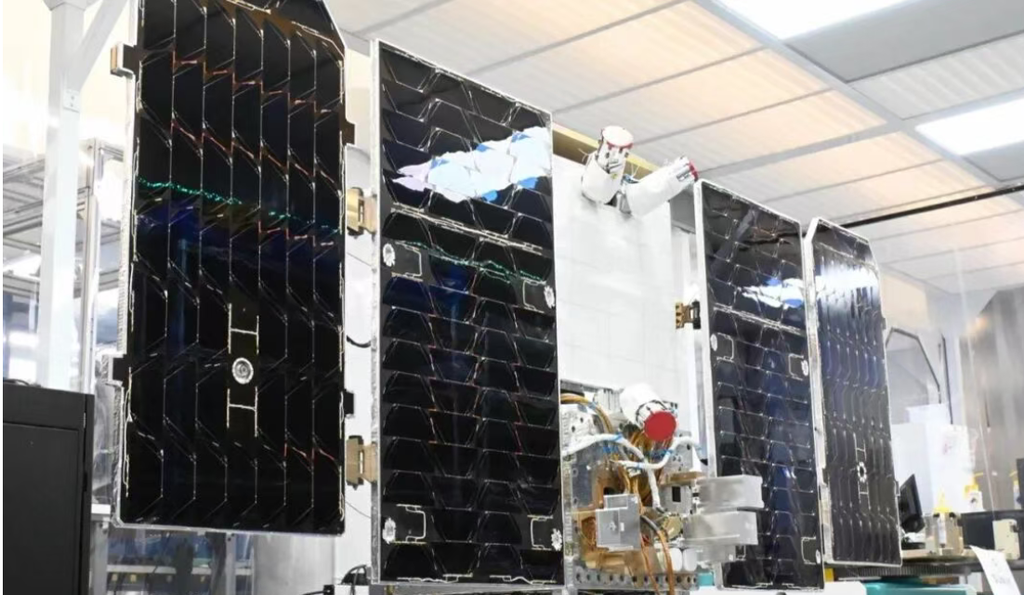
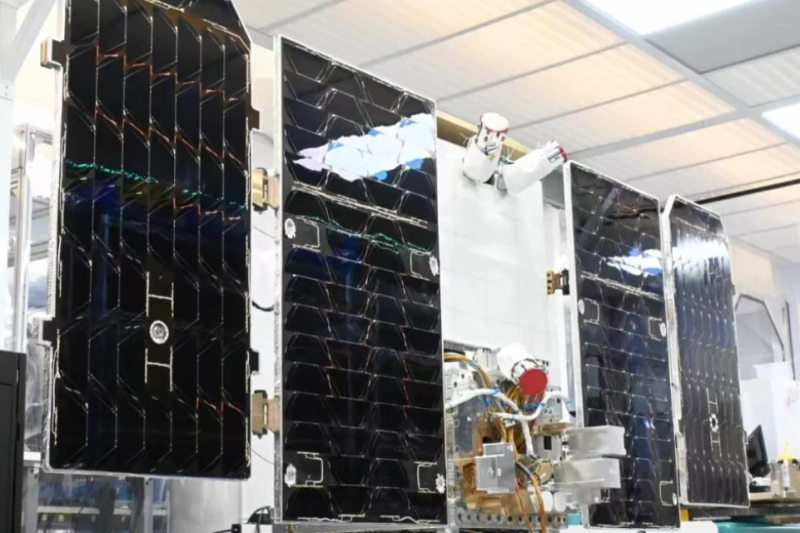
Space thermal management research covers products for efficient heat dissipation and enhanced cooling efficiency in vacuum environments.Google’s Suncatcher prototype space data center has reached orbit and established communication with ground stations. It carries four Google Tensor Processing Units (TPUs) with a peak power generation of 1 kW. At any given time, only one TPU can be powered on, and it can run for roughly 20 minutes per active session. This satellite serves as a pathfinder for future satellite constellations that fly in close formation and handle large-scale inference workloads in orbit. While many media reports focus on the on-orbit generation of a haiku by the Gemma 4 model, the 20-minute computing window and single-chip time-sharing power scheme mark a hard limit set by fundamental thermal physics in vacuum.
This article uses the Suncatcher mission as a test case to break down core thermal conflicts of space-borne AI accelerators, review available thermal architectures, compare gaps between ground thermal-vacuum tests and in-orbit measurements, contrast thermal tradeoffs across different space computing routes, and forecast thermal management evolution for the upgraded dual-satellite inter-satellite optical link version scheduled for 2027. It delivers engineering references for high-power space-borne computing hardware, liquid cold plates, heat pipe radiation cooling and orbital thermal simulation.
Keywords: Suncatcher; in-orbit data center; space-borne TPU; thermal management; radiative cooling in vacuum; thermal stress; space radiation; bit flip; inter-satellite optical link; orbital AI inference.
1. What Suncatcher Is: The First TPU Compute Node Validated in Orbit
Suncatcher is a moonshot project by Google. This prototype orbital data center node launched aboard a SpaceX Falcon 9 rideshare mission earlier this month. After three weeks of on-orbit commissioning and subsystem verification, ground engineers sent commands to run the on-board Google DeepMind Gemma 4 model. The model generated a haiku about space and a set of limericks, while collecting orbital environmental data. This milestone moves the project from ground thermal-vacuum chamber validation to live orbital testing.High-efficiency radiative materials rely on high thermal conductivity.Key hardware specifications:
● Compute payload: 4 Google TPUs; only one TPU can be powered up simultaneously.
● Power budget: 1 kW maximum output from solar arrays.
● Duty cycle constraint: A single TPU can run inference at full load for around 20 minutes before mandatory power-off for cooling.
● Test objectives: Verify TPU stability under cyclic orbital temperature shifts and space radiation, laying groundwork for tightly clustered satellite swarms for distributed computing.
● Forward roadmap: Two upgraded satellites are targeted for launch in 2027. They will carry advanced chips, feature higher power supply capacity and demonstrate high-speed inter-satellite optical links. This distributed cluster capability differentiates Suncatcher from single-satellite computing concepts such as Starcloud and Cowboy Space.
From a thermal engineering perspective, the 20-minute active limit and time-shared single-chip operation are far more meaningful than AI poetry output.
2. Why Thermal Constraints Dominate Space Computing
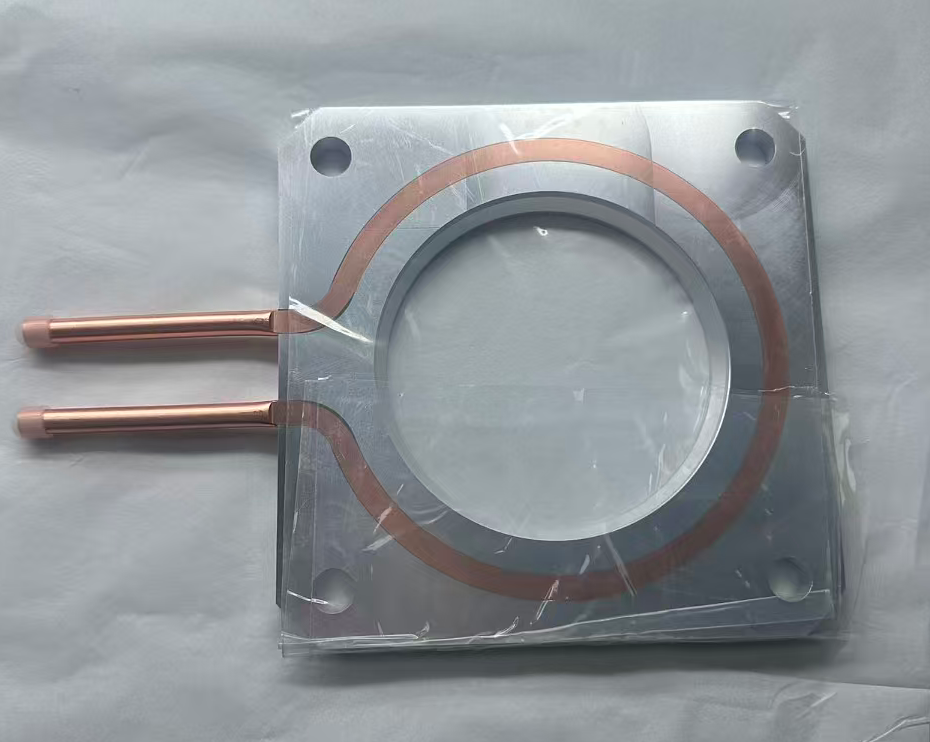
Ground data centers rely on forced convection, liquid cold plates or immersion cooling to remove waste heat efficiently. In low Earth orbit, convection disappears in vacuum. All heat must dissipate into deep space via infrared radiation, following the Stefan–Boltzmann law. Cooling performance is bounded strictly by radiator area, surface emissivity and component temperature or .Four overlapping constraints shape Suncatcher’s design:
● Coupled power and thermal budget: The 1 kW solar allocation must support TPU operation, telemetry, communication and attitude control. Chip power draw directly becomes heat load, so energy ceiling equals thermal input ceiling.
● Fixed radiator envelope: Small satellite platforms cannot accommodate unlimited radiator panels. Radiative heat rejection is far less efficient than liquid cooling used on the ground. There is no practical way to continuously dissipate heat from multiple TPUs running at high load.
● Cyclic orbital thermal stress: Low-orbit satellites repeatedly swing between sunlit hot phases and Earth-eclipse cold phases. Extreme temperature swings trigger thermal expansion and contraction, shifting thermal interface resistance and degrading thermal coatings. Short burst computing creates pulsed thermal shock that amplifies stress across chips, TIM layers, heat pipes and radiator panels.
● Synergistic risk from radiation and heat: Energetic particles induce bit flips that corrupt model weights and intermediate inference data. Higher semiconductor temperature increases the probability of single-event upsets. Ground particle accelerators can simulate radiation exposure in isolation, yet they cannot replicate the coupled environment of radiation + cyclic temperature + pulsed heat load that exists in orbit.To restate the haiku line in engineering terms: solar energy feeds computation, and the cold sink of deep space acts as the only effective heat sink for this system.
3. How the Thermal and Scheduling Architecture Works
Public information indicates the prototype uses a classic small-satellite thermal stack: thermal interface material (TIM) + copper/aluminum heat spreader + heat pipes + passive radiators. TPUs transfer heat through high-conductivity TIM to spreading structures. Heat pipes transport heat laterally to exterior radiator panels, which reject heat to space through infrared emission. No pumped liquid loop is fitted, to minimize mass, complexity and on-orbit failure risk.Google manages thermal limits at the compute scheduling layer with two core rules:
● Time-division power sequencing: Four TPUs share the same power and cooling path. Only one unit activates at a time. Remaining TPUs stay powered down as redundant reserves.
● Thermal throttling via duty cycle control: Each active TPU shuts down automatically after 20 minutes of continuous inference. It stays offline until junction temperature drops back within safe thresholds before the next compute cycle.
● Workload selection prioritization: Inference jobs are preferred over model training. Ground tests confirm radiation introduces fewer errors for inference workloads; training workloads with frequent memory access suffer much higher corruption risk. The prototype therefore focuses on Gemma 4 inference and environmental sensing, avoiding sustained high heat and heavy memory traffic.
● Combined thermal and radiation telemetry: On-board sensors log TPU junction temperature, radiation count, orbital position and solar incidence angle. The dataset calibrates thermal models and corrects deviations seen in thermal-vacuum simulations.
This approach trades continuous computing capacity for manageable thermal headroom. It is an interim compromise for the prototype, designed primarily to collect calibration and reliability data rather than deliver scalable persistent computing.
4. Comparative Tradeoffs Across Space Computing Architectures
The table below contrasts Suncatcher with other orbital computing concepts across compute topology, thermal strategy, core tradeoff and thermal bottleneck.
| Concept | Compute Topology | Thermal Strategy | Core Tradeoff | Thermal Bottleneck |
| Google Suncatcher (Prototype) | Single satellite with time-shared TPU; future clustered formation + inter-satellite optical link for distributed inference | Heat pipes + passive radiation, paired with compute time scheduling | Prioritize chip reliability under coupled orbital conditions; built for distributed cluster expansion | Limited radiator area, pulsed thermal shock, thermal crosstalk between closely flying satellites |
| Starcloud / Cowboy Space | Independent inference accelerators on separate satellites, no inter-node compute sharing | Dedicated radiator per satellite; no thermal interaction between platforms | Simple architecture, no inter-satellite thermal coupling; linear scaling only by adding more satellites | Fixed cooling ceiling per satellite, no shared thermal resources |
| SpaceX Orbital Data Center Concept | Large constellation with laser inter-satellite links | Large radiator arrays, potential closed-loop liquid radiation circuits | Leverage Starship low-cost launch to deploy large thermal structures | Satellites maintain large separation distances; low feasibility for nearby collaborative computing. Scaling depends entirely on Starship reusability cost curves |
| Notes: |
A unique challenge reserved for Suncatcher’s formation design is thermal crosstalk. Satellites flying close together block each other’s radiative view to deep space and exchange infrared heat flux. This effect is difficult to simulate accurately and requires in-orbit measurement.
Another key distinction: terrestrial data center thermal design targets steady-state cooling. For pulsed orbital compute nodes such as Suncatcher, transient thermal response, thermal capacitance and thermal fatigue life take priority over static thermal resistance.
5. Application Scenarios for the On-Orbit Thermal Test Data
● Space-borne LLM inference payloads: Local AI processing for remote sensing and autonomous spacecraft reduces bandwidth demand between satellite and ground. Burst-mode inference matches the “short active run, passive cool-down” thermal profile perfectly.
● Low-Earth-orbit distributed compute clusters (2027 roadmap): Closely grouped satellites connected by optical links run sharded large model inference. Thermal control requires both per-satellite thermal management and cross-node compute scheduling to avoid synchronized heat peaks.
● Calibration of thermal simulation for high-power aerospace chips: Thermal-vacuum chambers cannot fully replicate combined solar heating and particle radiation. Temperature and error data returned from Suncatcher refine simulation models in tools such as Ansys Icepak.
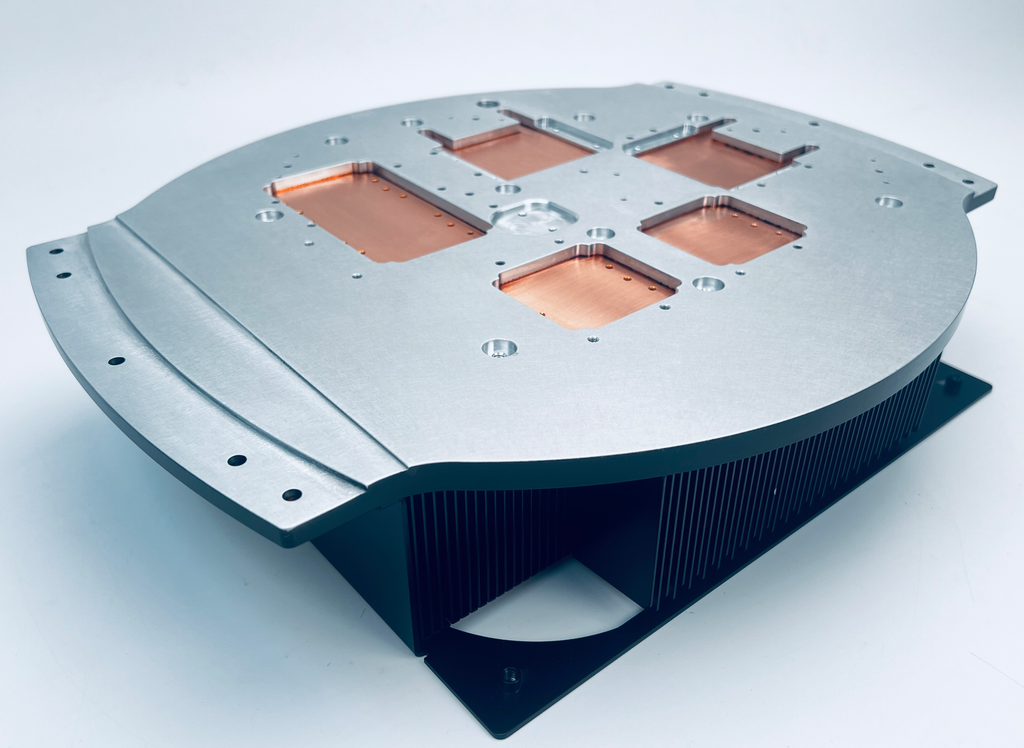
● Pre-research of next-generation space liquid cooling systems: The prototype uses passive heat pipes. Once single-node power rises to several kilowatts, passive radiation becomes insufficient. Closed cold plates coupled with space radiators will become mainstream. This mission delivers real orbital boundary conditions for liquid-cooled design.
● Reliability engineering for compute hardware: Quantify correlation curves between temperature, radiation dose and bit flip rate to support derating rules and redundant architecture design for aerospace TPUs and ASICs.
6. FAQ
Q1: Deep space sits at roughly 3K. Why is cooling still difficult? Is space a natural cold chamber?
3K is the background temperature of deep space, yet heat transfer relies purely on radiation. Radiative heat transfer scales with the fourth power of temperature difference. When radiator and chip temperatures are moderate, heat rejection per unit area stays low. The satellite also absorbs continuous solar flux and Earth albedo heating. The cold sink itself is free, but available radiative area is constrained by launch envelope and mass limits.
Q2: Why not power all four TPUs together? Is power supply the only limiting factor?
Power budget is one constraint, yet thermal risk carries greater weight. Four concurrent TPUs would double instantaneous heat load and exceed the radiator’s rejection capacity. Junction temperatures would trigger protection events or permanent thermal damage. Concurrent heating also worsens internal thermal gradients and thermal stress. Time-shared operation balances both power and thermal budgets.
Q3: Are radiation damage and thermal management independent variables? Can they be tested separately?
They cannot be decoupled. Rising temperature alters semiconductor carrier behavior and changes single-event upset cross-section. Radiation also degrades thermal interfaces, heat pipe working fluids and coatings, which gradually raises system thermal resistance. Particle accelerators and thermal-vacuum chambers only isolate one variable at a time. On-orbit testing is the only way to capture coupled performance.
Q4: What thermal upgrades will the 2027 inter-satellite optical link satellites include?
Two major upgrades: higher solar power budget to support longer compute sessions, plus mitigation for formation-specific thermal crosstalk and occlusion. Attitude maneuvers will orient radiators toward deep space during active computation, away from adjacent satellites and direct sunlight. Compute scheduling will extend across satellites to avoid synchronized thermal peaks in the cluster.
Q5: Can orbital data centers match the sustained high computing density of ground facilities?
Fundamental physical limits apply. Continuous megawatt-scale compute requires extremely large, lightweight radiator panels. Deployment at scale depends on low-cost, high-frequency Starship launches. Even with mature liquid cold plate + radiator systems, space computing will remain a niche for low-latency burst inference workloads for decades, rather than a replacement for terrestrial data centers.
7. Conversion Section
The Suncatcher mission illustrates clearly that the ceiling of space-borne AI compute is ultimately set by thermal management. Aerospace-grade heat pipes, phase change thermal storage, vacuum-brazed cold plates, skived fin heat sinks and specialized TIM materials follow design rules entirely different from data center or consumer cooling hardware.
KENFA TECH is a full-stack thermal management manufacturer. With two decades of thermal engineering expertise, we aim to jointly explore and develop optimized thermal solutions for space thermal management, and make modest contributions to the advancement of human civilization.We track thermal engineering progress for orbital AI accelerators, radar and laser payloads. Our scope covers thermal concept design, thermal simulation and prototype heat sink development for high-power space hardware. If you evaluate cooling solutions for vacuum or on-orbit high-power chips, share your thermal boundary conditions and load profiles for our review.or email to us king@kenfatech.com